

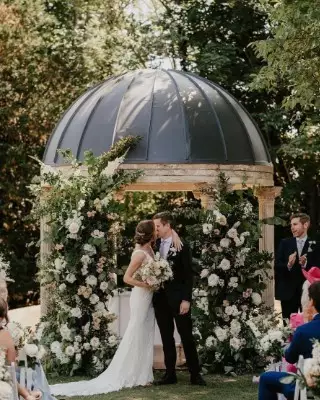

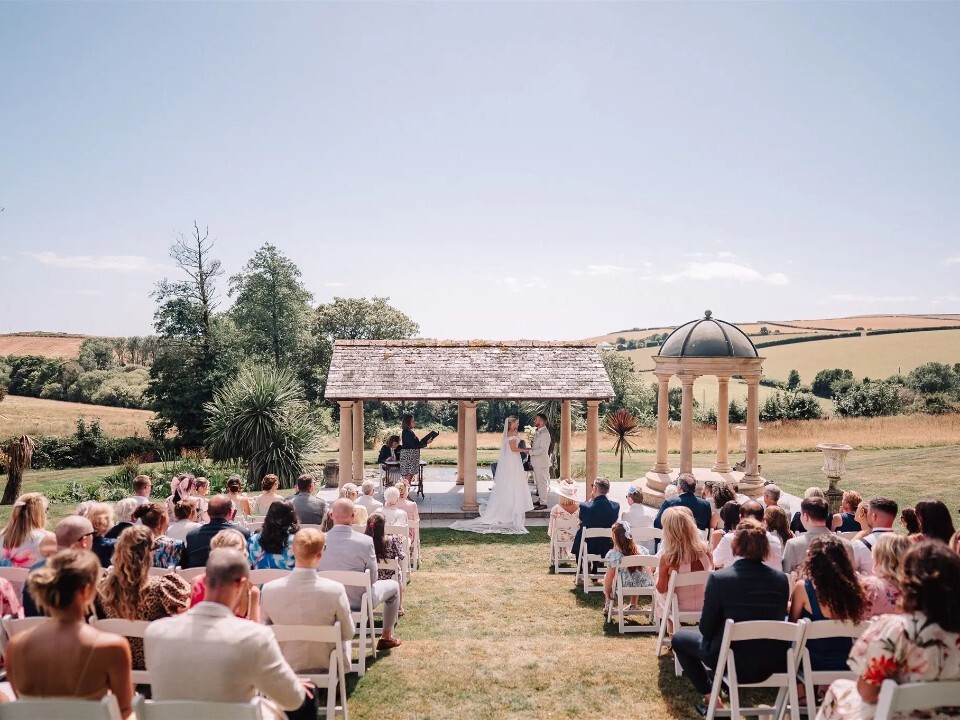

In April 2022, the law changed permanently to give couples greater freedom to hold civil wedding and civil partnership ceremonies outdoors at approved premises in England and Wales.
The change followed temporary legislation introduced in July 2021 during the Covid-19 pandemic, which allowed outdoor civil ceremonies to take place at approved premises without being confined to a permanent structure such as a bandstand or pagoda.
Following a government consultation, the Ministry of Justice confirmed the change would be permanent in March 2022. The Marriages and Civil Partnerships (Approved Premises) (Amendment) Regulations 2022 came into force on 6 April 2022.
What Changed for Outdoor Civil Weddings?
Before the temporary rules were introduced in 2021, civil marriages and civil partnership ceremonies at approved premises had to take place inside a permanent structure that had been approved by the local council. This could include an approved permanent structure within an approved venue's gardens or grounds, however the couple, the 2 witnesses and the 2 registrars all needed to be within the approved structure for it to be legal.
Fun fact: The temporary measures were introduced during the COVID pandemic when the government recognised that most outdoor permanent structures were too small to fit the legally required minimum numbers while still allowing space for government-enforced for social distancing.
The permanent change introduced in April 2022 expanded the definition of approved premises to include linked outdoor areas within the boundary of the property.
This means that an approved wedding venue can hold legal civil marriage and civil partnership ceremonies outdoors within its grounds, provided the relevant requirements are met.
For couples, this created considerably more flexibility when choosing where to hold their ceremony, making settings such as gardens and other outdoor areas within approved wedding venues possible locations for the legal ceremony itself.
According to the government's consultation, 96% of respondents supported making the outdoor civil ceremony provisions permanent.
What Are the Rules for Outdoor Civil Weddings?
The 2022 change did not mean that couples could legally marry in any outdoor location.
For a legal outdoor civil marriage or civil partnership ceremony:
- the ceremony must take place within the grounds of an Approved Premises
- the venue must also include approved built premises, including at least one approved room
- the proposed outdoor ceremony location must meet the legal requirements applying to Approved Premises, including being considered 'seemly and dignified'
- arrangements for the ceremony must be agreed with the relevant registration service
- requirements relating to matters such as public access and signage continue to apply
Existing Approved Premises did not have to apply separately for each outdoor ceremony location within their linked grounds, although venues must consult the superintendent registrar before arranging ceremonies in outdoor areas. Inevitably this has led to inconsistencies between registration districts on where the ceremony can take place, with some Superintendent Registrars only permitting pre-approved and named spaces within the grounds, and others taking a more flexible approach.
The change also allows ceremonies to take place in semi-permanent structures, such as marquees, where they are situated within the linked outdoor area of the Approved Premises.
Couples planning an outdoor wedding are usually asked to ensure that there is shade and shelter for the registrars conduction the service for their comfort and safety.
You can read the government guidance on outdoor civil marriage and civil partnership ceremonies for the full requirements.
What Did the 2022 Changes Mean for Religious Weddings?
The April 2022 regulations applied to civil marriages and civil partnerships at Approved Premises. They did not make outdoor religious marriages generally legal.
At the time, the government also consulted on allowing more religious marriages to take place outdoors in the grounds of places of worship. The proposal received significant support, with 93% of consultation respondents in favour.
However, changing the rules governing religious marriages required separate changes to primary legislation and was therefore not included in the regulations that came into force in April 2022.
As a result, most religious marriages in England and Wales remain subject to separate rules about where the legally binding ceremony can take place. Jewish and Quaker marriages are important exceptions because they are not subject to the same statutory location restrictions and can already take place outdoors.
The rules for Anglican weddings are also distinct from those applying to other religious groups, while most other legally recognised religious marriages must currently take place in an appropriately registered place of worship.
Could Wedding Law Change Again?
The 2022 outdoor wedding reforms may eventually be overtaken by much wider changes to weddings law in England and Wales.
In July 2026, the government launched its Tying the Knot: Reforming Weddings Law in England and Wales consultation, following recommendations made by the Law Commission in 2022.
The proposed reforms would represent a much bigger change altogether than the 2022 outdoor wedding regulations. Instead of the law focusing primarily on the building or venue where a wedding takes place, the proposed system would focus on the officiant responsible for the ceremony. This could also change the role of wedding celebrants, with the proposals potentially allowing authorised officiants to conduct legally binding ceremonies within the new framework.
Read more about the implications of the proposed wedding law reform and what the changes could mean for couples and the UK wedding industry.