



Wedding ceremonies in the UK come in many forms, with different legal requirements, traditions and levels of personalisation. While many people still think of getting married in a church or registry office, couples today have a much wider range of ceremony options to consider.
This guide explains the main types of wedding ceremonies in the UK, how they work legally, and what couples need to think about when choosing the right ceremony for them. Where you want more detail, we link to in-depth guides and real examples to help you explore each option further.
Legal requirements outlined here apply primarily to England and Wales. Scotland and Northern Ireland have some different rules, particularly around humanist and religious ceremonies, so couples should check local guidance.
Types of Wedding Ceremonies in the UK
There are several recognised types of wedding ceremony in the UK. The key difference between them is whether the ceremony is legally binding, religious, or symbolic. In the UK, wedding ceremonies generally fall into the following categories:
- Civil wedding ceremonies
- Religious wedding ceremonies
- Humanist and celebrant-led ceremonies
- Interfaith wedding ceremonies
- Symbolic or non-legal ceremonies
Each option comes with different requirements, levels of flexibility and legal considerations. Some couples choose to combine options, such as completing the legal ceremony separately and holding a personalised or religious celebration on another day.
Civil Wedding Ceremonies and Partnerships
Civil Marriage
A civil marriage is a non-religious, legally recognised wedding ceremony conducted by a registrar or authorised official. Civil marriages must take place at a register office or a venue licensed for civil ceremonies, and be conducted by a registrar. To marry in a civil ceremony, couples must:
- Give legal notice at their local register office based on where they live
- Meet eligibility requirements (age, relationship status, residency)
- Hold the ceremony at a licensed venue
Civil wedding ceremonies usually last 20-30 minutes and follow a simple legal structure, with some flexibility to include readings or music that are non-religious. Religious content is not permitted within a civil wedding ceremony.
If you'd like to see how a civil ceremony is typically structured, you can view a sample civil ceremony with example wording and order.
Civil Partnership
A civil partnership is a legally recognised relationship that offers the same legal rights as marriage, without religious elements. Civil partnerships are available to both same-sex and opposite-sex couples in England and Wales.
The legal formation of a civil partnership takes place when both partners sign the civil partnership schedule in the presence of a registrar. A ceremony is not legally required.
If couples choose to include a ceremony alongside the signing, it must be non-religious and take place at a register office or a venue licensed for civil ceremonies. Civil partnership ceremonies are usually brief and simple in structure.
Humanist and Celebrant-Led Wedding Ceremonies
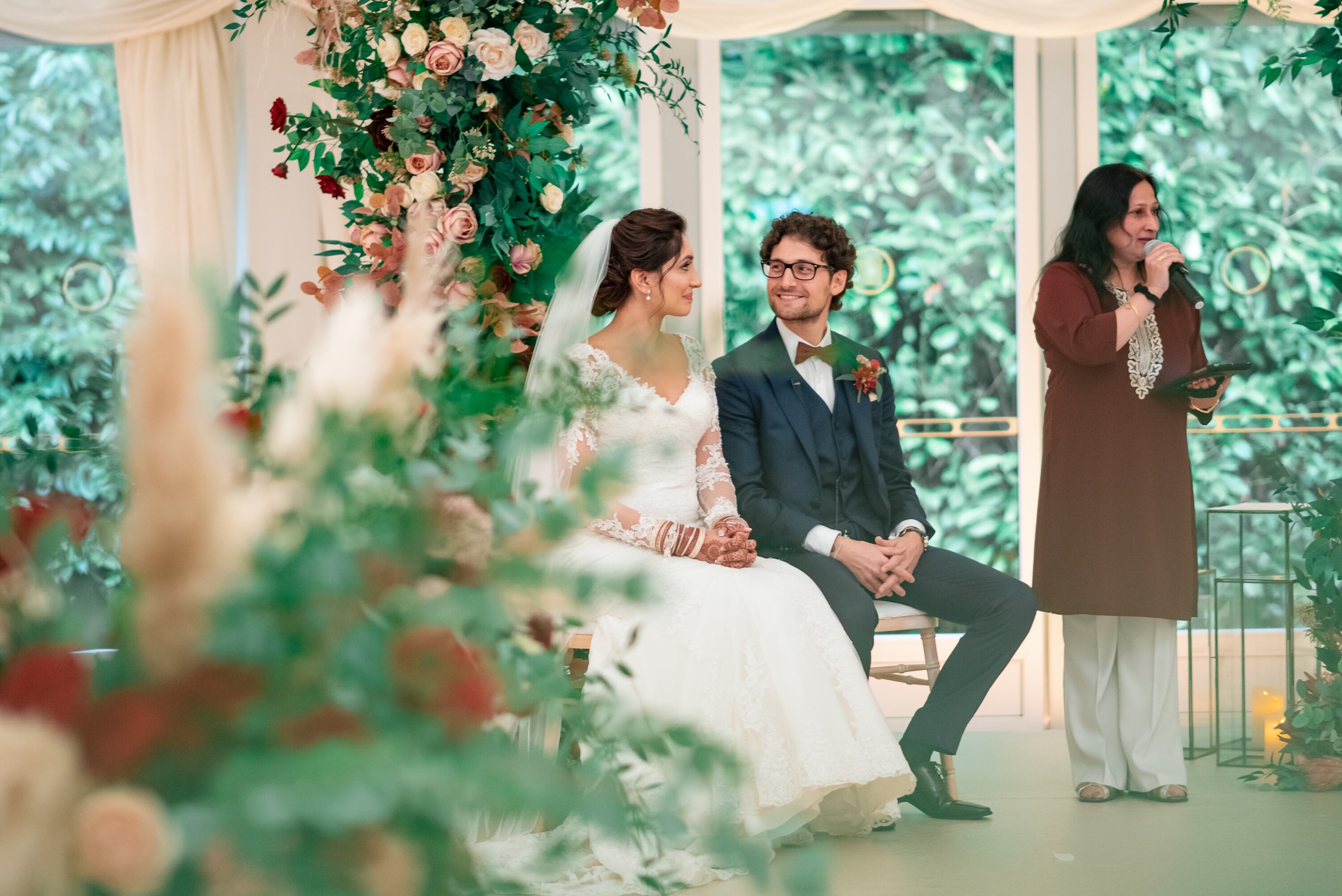
Humanist and celebrant-led ceremonies are increasingly popular with couples who want a personal ceremony that reflects their values and relationship. Humanist ceremonies are non-religious, while celebrant-led ceremonies can be non-religious, spiritual or include elements of faith.
Humanist Wedding Ceremonies
Humanist wedding ceremonies are written specifically for each couple and have no set format. They often include personal stories, readings, vows and symbolic elements, but they do not include religious content. Humanist ceremonies are based on non-religious beliefs and focus on the couple's values, relationship and commitments to one another.
In England and Wales, humanist wedding ceremonies are not currently legally recognised, so couples usually complete the legal part of their marriage separately at a register office before or after their ceremony. In Scotland, however, humanist marriages are legally recognised when conducted by an authorised celebrant. Couples who would like to include religious or spiritual elements typically choose an independent celebrant rather than a humanist ceremony.
You can explore an example of a humanist or celebrant-led ceremony to see how these ceremonies are typically structured in practice.
Independent Celebrant Ceremonies
Independent celebrants offer even greater flexibility. Unlike humanist ceremonies, celebrant-led ceremonies may include religious, spiritual or cultural elements if the couple wishes. This makes them a popular choice for couples who want a personalised ceremony that does not fit neatly into a single religious or non-religious framework.
As with humanist ceremonies, celebrant-led ceremonies in England and Wales are not legally binding. Couples must complete a separate civil ceremony to make their marriage legal.
For a full explanation of how celebrants work and how to choose one, see The Ultimate Guide to Celebrants and Celebrant-led Ceremonies.
Religious Wedding Ceremonies
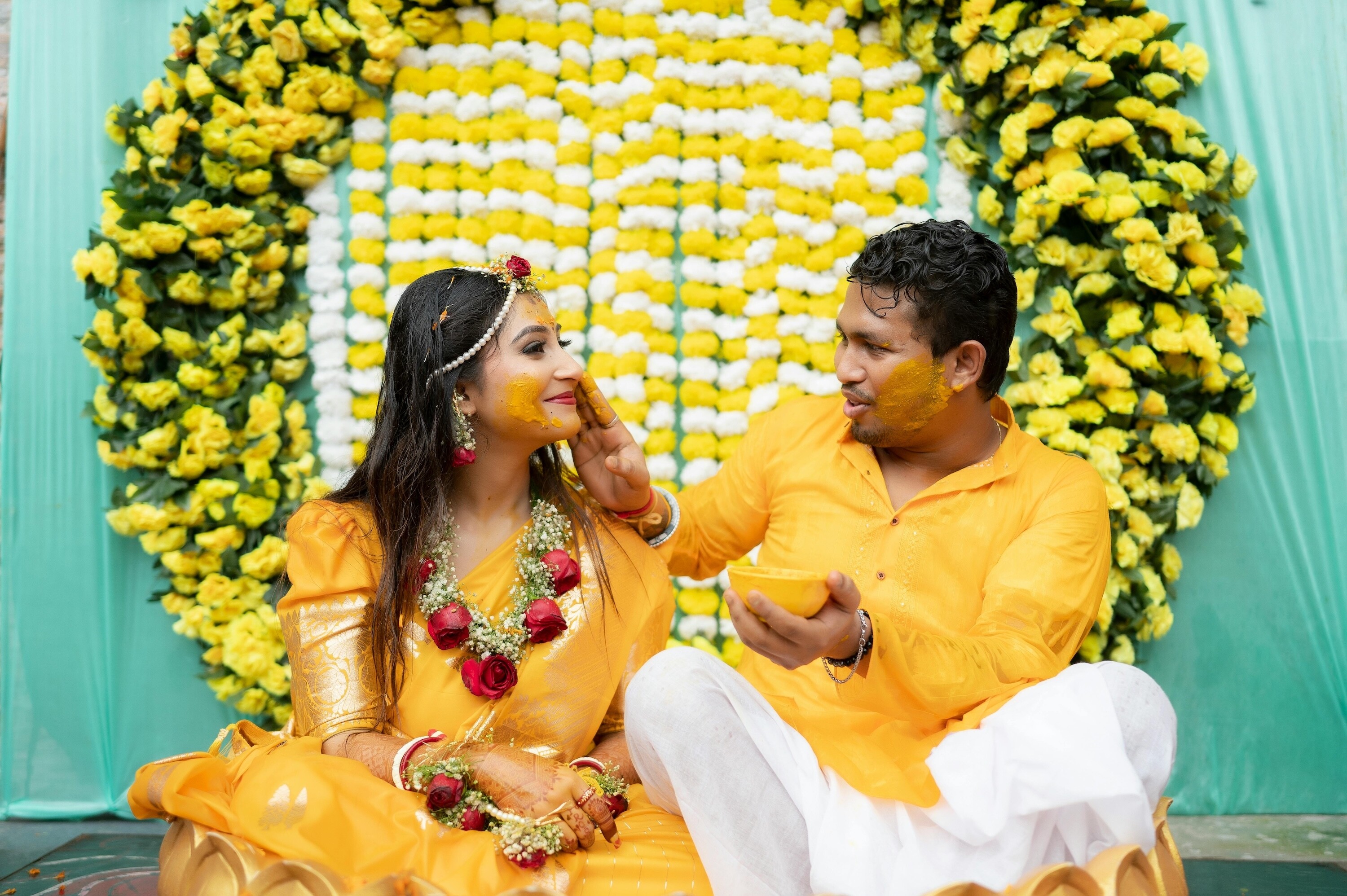
Religious wedding ceremonies follow the traditions and beliefs of a particular faith. Legal recognition, preparation requirements and ceremony structure vary depending on the religion and venue. Some religious ceremonies are legally recognised in England and Wales when conducted by authorised officiants, while others require a separate civil ceremony. Couples should always check the specific legal requirements for their faith and venue before making plans.
Below is a brief overview of some of the most common religious wedding ceremonies in the UK.
Catholic Wedding Ceremonies
A Catholic wedding is one of the sacraments of the Catholic Church and is usually celebrated in a Catholic church. Couples are normally required to complete marriage preparation and meet with a priest in the months leading up to the ceremony.
Some Catholic weddings take place within a full Mass, which means the ceremony can last longer than a civil wedding. Catholic weddings are legally recognised in the UK when conducted by an authorised priest and in accordance with marriage law.
For a detailed explanation of structure, requirements and preparation, see A Guide to a Catholic Wedding Ceremony.
Muslim Wedding Ceremonies
A Muslim wedding ceremony centres around the signing of a marriage contract, known as the Nikah. Customs and traditions vary widely depending on cultural background and interpretation of Islamic practice.
Muslim wedding ceremonies are usually short, but celebrations may extend over several events. Legal recognition depends on how and where the ceremony takes place. In many cases, couples also complete a separate civil ceremony to ensure their marriage is legally recognised in the UK.
You can find a full overview of customs, legal considerations and ceremony structure in A Guide to a Muslim Wedding Ceremony.
Sikh Wedding Ceremonies
Sikh wedding ceremonies, known as the Anand Karaj, usually take place in a Gurdwara and follow a specific religious structure. In the UK, the marriage can be legally recognised when the ceremony takes place in a Gurdwara that is registered for marriages and all legal requirements are completed. Couples should check with their chosen Gurdwara, as some may require a separate civil ceremony to ensure the marriage is legally recognised.
The Anand Karaj is often part of wider celebrations that may take place over several days.
Read more in A Guide to a Sikh Wedding Ceremony.
Hindu Wedding Ceremonies
Hindu wedding ceremonies are religious ceremonies that include a series of traditional rituals. The ceremony itself is usually performed by a priest and may take place at a venue such as a hotel or town hall, followed by religious blessings.
In the UK, Hindu wedding ceremonies are not legally recognised on their own, so couples usually complete a civil ceremony separately.
For more detail, see A Guide to a Hindu Wedding Ceremony.
Jewish Wedding Ceremonies
Jewish wedding ceremonies include a number of traditional elements, such as the chuppah and ketubah. Ceremonies are conducted by a rabbi and may take place in a synagogue or another suitable venue.
Jewish weddings are legally recognised in England and Wales when conducted in accordance with UK marriage law.
You can explore the structure and traditions in A Guide to a Jewish Wedding Ceremony.
Interfaith Wedding Ceremonies

Interfaith wedding ceremonies bring together traditions from two different faiths or belief systems. These ceremonies often require careful planning to balance religious, cultural and legal considerations.
Some interfaith ceremonies are legally recognised, while others are symbolic and paired with a separate civil ceremony. This depends on the faiths involved, the officiant, and whether the ceremony meets UK legal requirements. Many couples choose a celebrant to help create a ceremony that reflects both backgrounds, particularly where flexibility is needed.
You can read more in A Guide to an Interfaith Wedding Ceremony.
What Is the Typical Order of a Wedding Ceremony?
While the structure varies depending on the type of ceremony, a typical wedding ceremony often includes:
- Arrival and entrance of the couple
- Welcome and opening words
- Readings or personal elements
- Legal declarations or vows (where applicable)
- Exchange of rings
- Closing words and exit
Civil, religious and celebrant-led ceremonies all follow different formats, but this provides a general guide to what couples can expect. The order and content of a ceremony can vary significantly depending on cultural, religious and legal requirements.
How Long Do Wedding Ceremonies Last?
The length of a wedding ceremony depends on the type of ceremony chosen:
- Civil wedding ceremonies usually last around 20-30 minutes
- Religious ceremonies are often longer and may last 45-90 minutes
- Humanist and celebrant-led ceremonies are flexible and usually last 30-45 minutes
Personal and Symbolic Ceremony Elements
Some couples choose to include symbolic or personal elements alongside their main ceremony, or as part of a separate non-legal celebration. These can include ring ceremonies, promises, readings or poems.
Choosing the Right Wedding Ceremony
Choosing the right wedding ceremony depends on:
- Whether you want a legally binding ceremony or a symbolic one
- Religious or cultural beliefs
- Location and venue options
- How much flexibility and personalisation you want
There is no single “right” choice. Many couples combine elements, such as completing the legal paperwork separately and holding a personalised ceremony on another day.
Exploring the different options and understanding the legal requirements will help you decide which ceremony best suits you.