Wedding flowers play an important role in shaping the look and feel of a wedding, from personal flowers like bouquets and buttonholes to ceremony arrangements and reception décor. They help bring your venue, colour palette and overall style together, and feature heavily in photographs throughout the day.
This guide explains how wedding flowers are typically planned, what they tend to cost in the UK, and how to make informed choices about styles, seasons and priorities. Prices, timings and trends are indicative and can vary depending on availability, season and individual requirements. Once you have a clearer idea of what you're looking for, you can explore professional wedding florists to help bring those plans together and advise on the practical details.
Wedding flowers explained: what you need to know first
In simple terms, wedding flowers usually fall into three main categories, each serving a different purpose across the day. How many you choose and how much you spend will depend on your priorities, wedding venue and overall wedding budget.
- Personal flowers, such as bouquets and buttonholes
- Ceremony flowers, which frame the space where you exchange vows
- Reception flowers, including table arrangements and decorative accents.
Not every wedding includes all of these. Some couples keep things simple with just personal flowers, while others choose statement installations or floral features. Knowing what matters most to you early on will help guide decisions later.
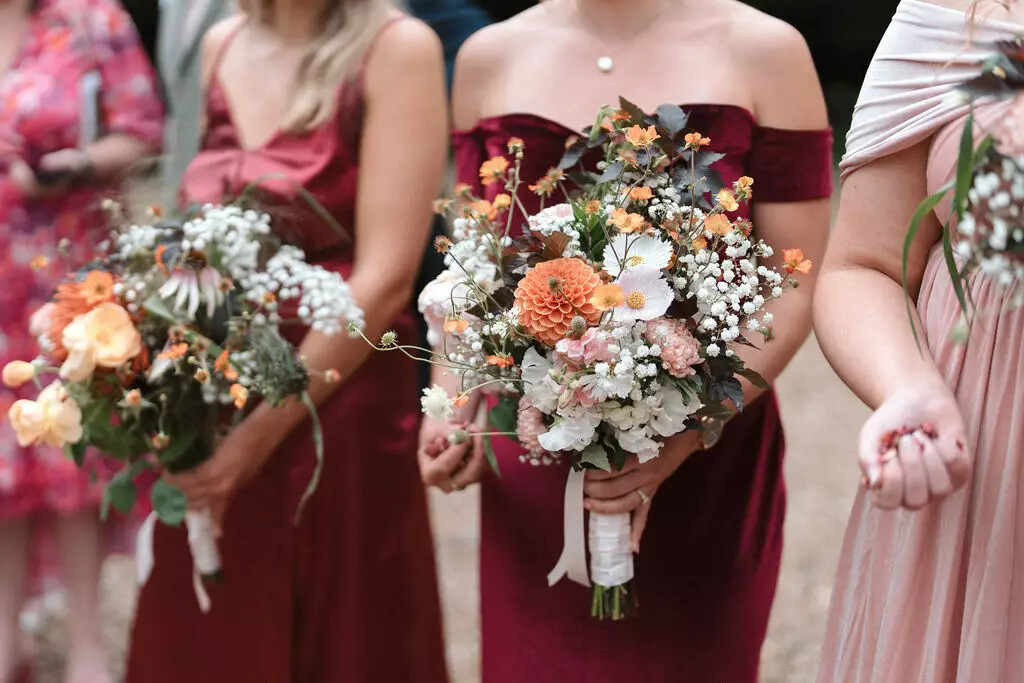
How much do wedding flowers cost in the UK?
Wedding flower costs are often underestimated, so it's helpful to understand typical ranges early in the planning process. Flowers can vary widely in price depending on style, scale and the time of year, which is why budgets differ so much from one wedding to another.
As a general guide:
- A bridal bouquet often costs between £100 and £250, depending on flower choice, size and design.
- Most couples spend 7-10% of their wedding budget on flowers and decor. Based on this, a couple spending £30,000 on their wedding will likely spend between £2,000 and £3,000 on their wedding flowers, covering personal flowers, ceremony and reception arrangements.
These figures are indicative and may be higher or lower depending on factors such as the number of arrangements needed, the scale of the designs, seasonal availability and any logistical requirements. Being aware of these ranges can help set realistic expectations and make planning conversations easier from the outset.
What affects the cost of wedding flowers?
The cost of wedding flowers can vary significantly depending on a few key factors:
- Seasonality (flowers in season are usually better value)
- Number of arrangements required
- Scale and complexity of designs
- Choice of flowers and foliage
- Logistics, such as delivery and set-up requirements
Seasonal flowers tend to be more cost-effective and reliable, while out-of-season blooms or very specific colour requirements can increase costs.
What flowers are best for a wedding?
There is no single "best" flower for a wedding, but some flowers are popular because they are durable, versatile and photograph well.
Common choices include:
- Roses
- Peonies
- Ranunculus
- Dahlias
- Hydrangeas
- Foliage such as eucalyptus or ruscus
Traditional wedding flowers often include white or ivory blooms, but modern weddings increasingly use colour, texture and mixed varieties. Scent is also worth considering, as very strong fragrances can be overpowering in enclosed spaces.
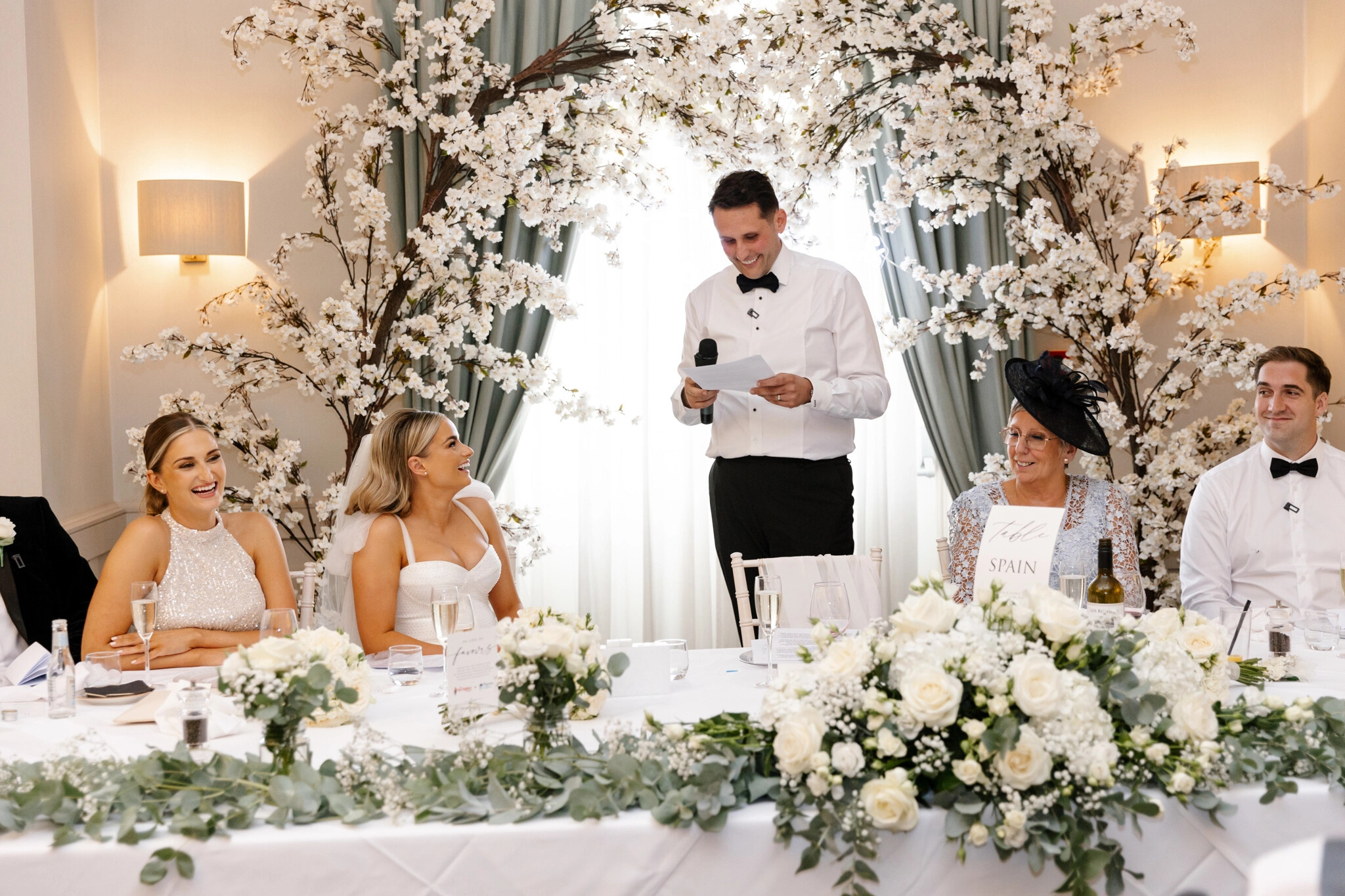
Types of wedding flowers you may need
Personal wedding flowers
These are worn or carried by members of the wedding party and close family. They may include:
- Bridal bouquet
- Bridesmaids' bouquets
- Buttonholes or boutonnieres
- Corsages or small posies
- Flower girl arrangements
Some couples also choose to include flowers for parents, grandparents or officiants.
Ceremony flowers
Ceremony flowers frame the space where your vows take place and often appear in many photographs. These might include:
- Floral arches or installations
- Pedestal or plinth arrangements
- Chair or aisle flowers
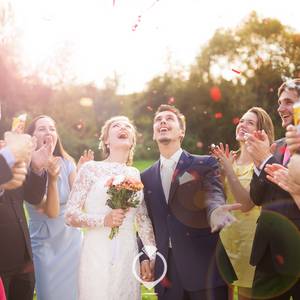
- Petals for a confetti-style exit (where permitted)
Reception flowers
Reception flowers are usually designed to be seen up close for longer periods. Common examples include:
- Table centrepieces
- Top table arrangements
- Flowers for welcome tables, bars or guest book areas
- Floral details for signage or staircases
Bridal bouquets and bouquet styles
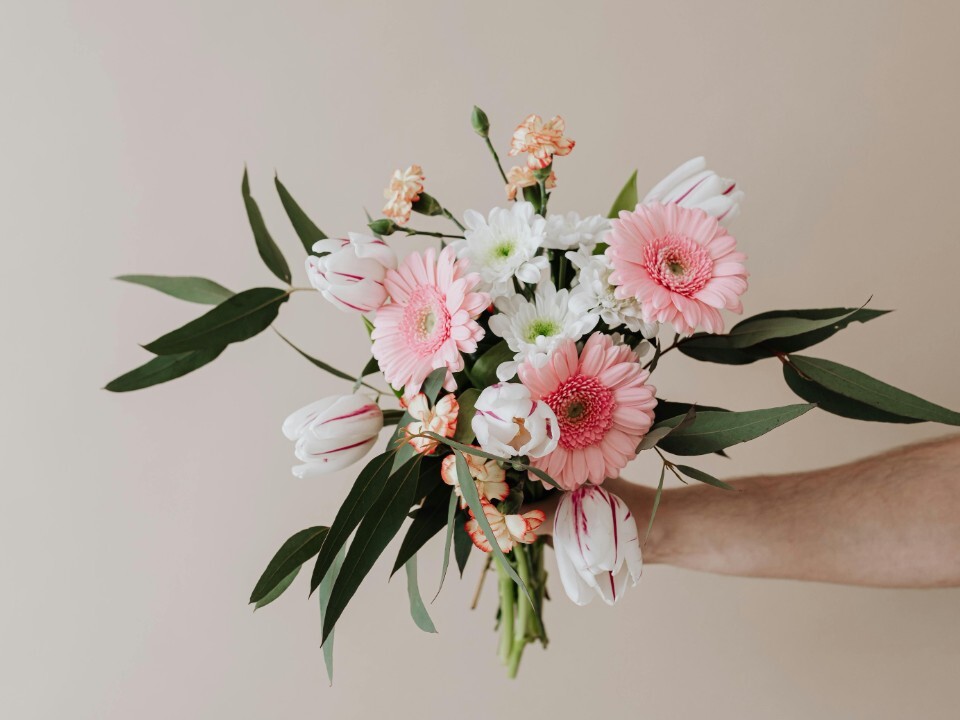
The bridal bouquet is often the most photographed floral element of the day, so it should complement both your outfit and the overall style of the wedding. Popular bridal bouquet styles include:
Rustic
Loose, natural arrangements with mixed stem lengths and a relaxed feel. Often feature foliage and seasonal flowers.
Fine art
An expanded, more expressive version of rustic bouquets. These are usually larger, asymmetric and feature statement blooms with movement.
Teardrop
A trailing shape that creates a strong visual statement. Modern versions tend to be looser and more organic than traditional wired designs.
Presentation
Designed to rest along the arm rather than being held upright. Often use oversized blooms and work well with simple or contemporary dresses.
Crescent
A curved shape that uses structured wiring. Less common, but suited to tailored or fashion-forward looks.
Nosegay
Small, compact bouquets, often chosen for bridesmaids or younger members of the wedding party.
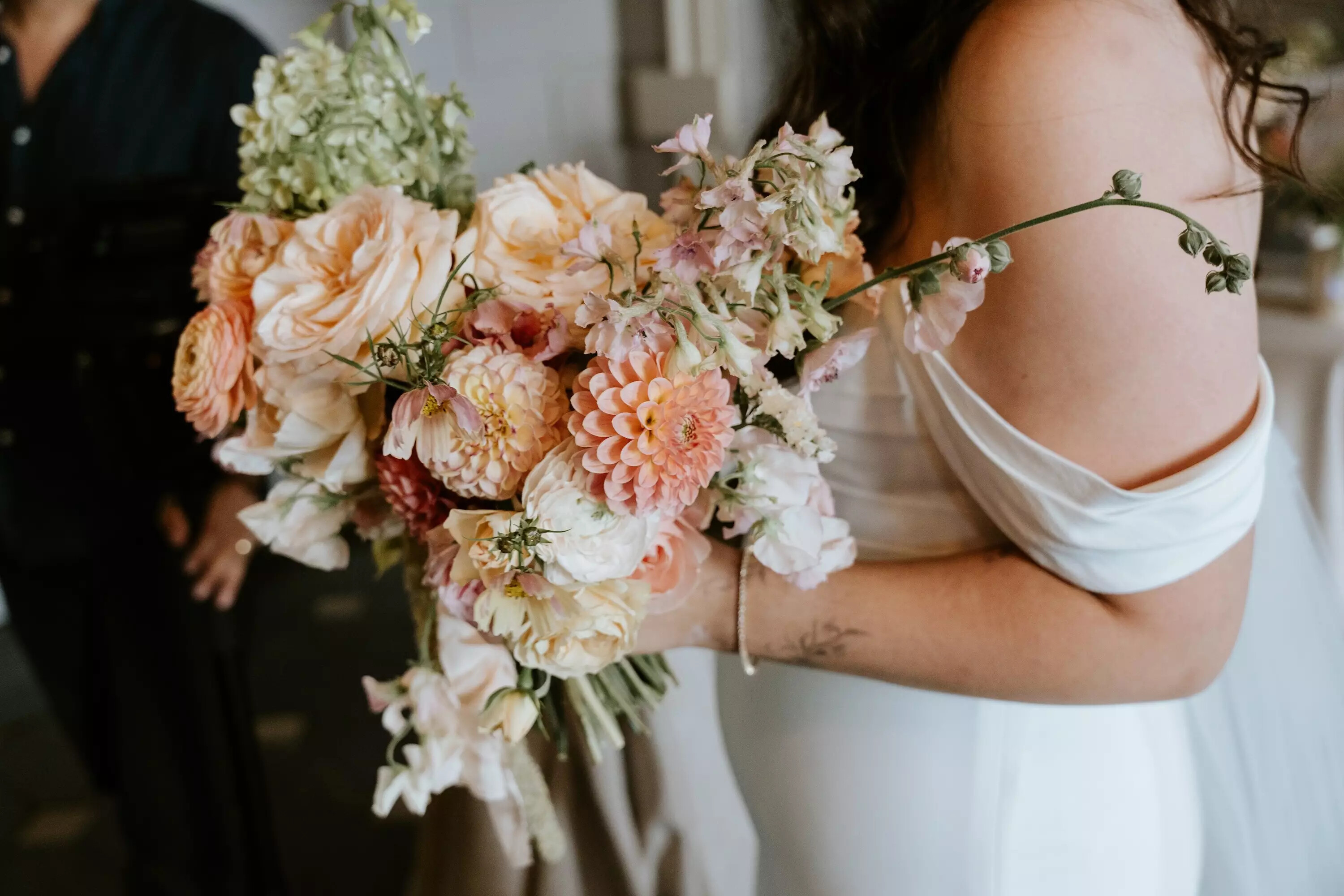
Choosing colours and flowers by season
Your colour palette and the time of year both influence flower choices. In the UK, many couples choose flowers that are naturally in season, as these tend to look more appropriate, perform better on the day and offer better value.
- Spring suits soft pastels and delicate blooms
- Summer allows for brighter colours and fuller arrangements
- Autumn works well with warm tones, berries and textured foliage
- Winter often features richer colours, evergreens and structured designs
Rather than matching colours exactly, it usually works better to use complementary tones and shades. Seasonal flowers are typically fresher, more affordable and better suited to the time of year. You can explore how different flowers work throughout the year in our guide to British wedding flowers.
Fresh or artificial wedding flowers
When planning your wedding flowers, most couples are deciding whether to use fresh flowers or artificial alternatives on the day. Both options can work, depending on priorities such as budget, seasonality and practicality.
Fresh flowers
Fresh flowers are the most common choice for weddings. They offer natural scent, texture and movement, but are perishable and influenced by seasonality and temperature. Flower choice and availability can vary depending on the time of year.
Artificial flowers
High-quality artificial or silk flowers can be used as an alternative to fresh blooms. They are not affected by seasonality and can be reused after the wedding, although well-made designs can cost a similar amount to fresh flowers.
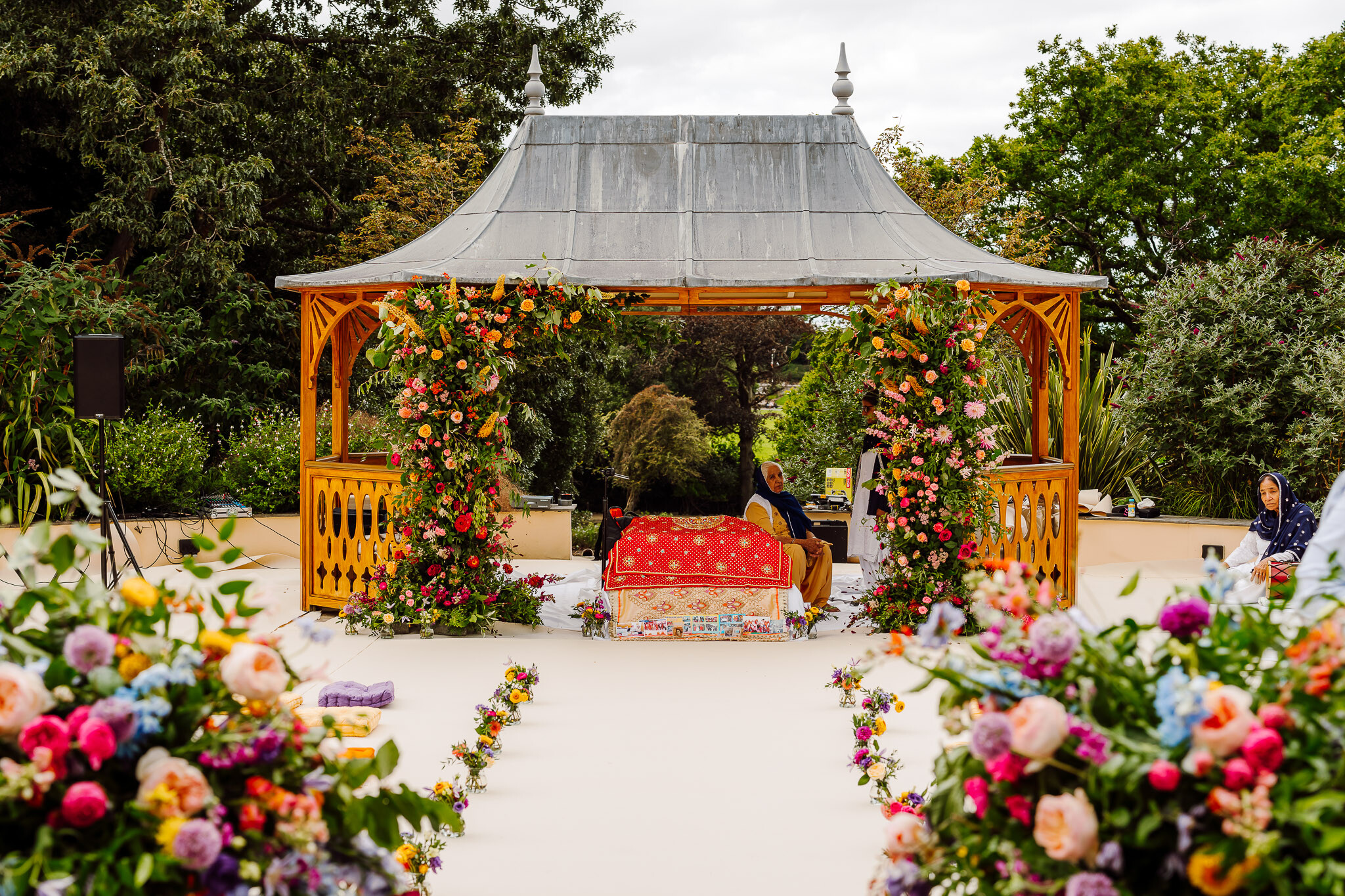
Can wedding flowers be preserved after the day?
Some couples choose to preserve their wedding flowers once the day is over, most often the bridal bouquet. This is usually handled by specialist preservation services. Flowers are carefully dried or treated to retain their shape and colour before being framed, set in resin, or turned into a similar keepsake.
Preservation is a sentimental choice rather than a core planning decision and is usually considered after your wedding flowers have been chosen. While preservation takes place after the wedding, many specialists fill their diaries early, so it can be helpful to enquire ahead of time.
How to save money on wedding flowers
If you're working to a budget, the biggest savings usually come from thoughtful planning rather than cutting back on arrangements altogether. Focusing on key arrangements and making flexible choices around flowers and colours can help stretch your budget further without compromising the overall look.
- Focus on the arrangements that matter most, such as personal flowers and key ceremony features, as these tend to appear most in photographs.
- Use foliage and greenery strategically to add scale and texture without relying on large quantities of premium blooms.
- Reuse arrangements where possible, for example moving ceremony flowers into the reception, if timings and logistics allow.
- Stay flexible on flower choices and colours, as seasonal alternatives can often achieve a similar look at a lower cost.
- Separate must-haves from nice-to-haves early on, so your budget is spent where it will have the most visual impact.

When should you book wedding flowers?
For many couples, their wedding florist is one of the key suppliers for the day and is often prioritised early in the planning process. In a typical wedding planning timeline, couples tend to book their wedding flowers around 12 months in advance, particularly for peak seasons such as late spring and summer. Booking earlier can be helpful if you're planning larger installations, have a specific floral style in mind, or are getting married during a particularly busy period.
Timings can vary depending on the scale of your plans and the time of year, so allowing plenty of lead time gives you space to discuss ideas, budgets and seasonal availability without feeling rushed. For simpler arrangements or off-peak dates, shorter lead times may still be possible, but it's generally better to start conversations sooner rather than later.
What to do next once you've planned your flowers
Once you have a clear idea of your style, priorities and budget, the next step is to explore professional wedding florists who can bring those plans together and advise on practical details.
Working with the right florist can make the entire process feel far more manageable. Understanding how to choose a wedding florist, and what to ask before booking, can help set expectations early on.