


If you're planning a wedding (or you've been asked to be part of one), the “groom side” roles can feel a bit confusing. Who does what, who stands where, and who's actually responsible for the wedding rings?
It's more than just turning up and looking great in a wedding suit, there are key responsibilities on the big day too for the men of the wedding party. Here's the simple breakdown of the groom, best man, groomsmen, ushers and page boys, plus what each role actually involves in modern UK weddings.
Quick answer: who does what?
- Best man: the groom's main support, rings, speech, keeping things moving.
- Groomsmen: backup for the best man and groom, planning help, hype crew, photos.
- Ushers: guest logistics (greeting, seating, orders of service, directions).
- Page boy: a child role, walking down the aisle, carrying rings or a sign (optional), being adorable in photos.
In a rush? Skip to:
Role Comparison Table
| Role | Main purpose | When they're busiest | Typical tasks |
|---|---|---|---|
| Groom | Make key decisions with your partner, attend the stag do, get married | Throughout planning and wedding day | Suit, rings, vows, speech (if doing one), staying calm. |
| Best Man | Groom's right-hand person | Stag do planning, wedding morning, ceremony, speeches | Organising the stag do, rings, speech, timing, organising people. |
| Groomsmen | Support the groom and best man | Pre-wedding preparations and support on the day | Help the groom on the day, photos, errands on and just before the day. |
| Ushers | Look after guests on the wedding day | Arrival and ceremony | Seating, directions, orders of service, helping older guests |
| Page Boy | Child role (optional) | Ceremony | Walk aisle, carry rings/sign, photos. |
The Groom: what's your job (besides getting married)?
The groom is one half of the marrying couple, which means you're involved in the key decisions from day one. That usually includes choosing your venue, sorting the guest list, deciding on food and drink, organising suits, buying rings, and figuring out what kind of ceremony you want.
He will need all the help he can get from his best man and ushers to ensure that he looks and feels great on the big day and that his speech hits all the right notes.
Reality check: Many grooms underestimate how much there is to do when planning a wedding. Your best man, groomsmen and ushers exist to make the day (and build up) smoother, so choose them well.
Best Man: What The Role Really Involves
The best man is the groom's main support, both emotionally and practically. Think organiser, problem-solver and calm presence. You're there to keep things running smoothly, spot issues before they become stressful, and step in when something needs sorting. On the day, you're the person the groom and wedding team rely on to make sure plans stay on track.
Traditionally, the best man was also responsible for keeping the rings safe and that's still a core duty - but modern weddings expect a lot more. Best man duties start well before the wedding day and continue straight through the ceremony, speeches and celebrations.
What does a best man do in a wedding?
Before the wedding: planning and prep
The best man usually takes the lead on key bits of planning, especially around the groom's experience and the groom party:
- Organise the stag do - plan, coordinate dates, manage budgets and make sure it actually fits the groom's style.
- Help with logistics - attend suit fittings with the groom, know the schedule, remind the groom of key dates and keep him on track.
- Communicate with the groomsmen - make sure everyone knows their responsibilities and timings, so there's no last-minute confusion.
- Support decision-making - be a sounding board for the groom if questions or dilemmas come up during planning.
This prep makes your life easier on the wedding day and gives the groom confidence that everything's covered.
On the wedding day: practical support
On the day itself, your job is to keep the groom calm, organised and ready for what's next:
- Be organised from the start - arrive early, check the timeline, and know who's responsible for what.
- Look after the groom - help with buttonholes, tie, cufflinks and make sure he's calm, fed and hydrated.
- Hold the rings - unless someone else is officially doing it, you're typically the one trusted with them.
- Coordinate times - ensure the groom and groomsmen are where they need to be, when they need to be there.
- Step in when needed - if something changes or goes wrong, make quick decisions quietly and confidently.
A best man who's prepared can turn moments of stress into moments that just glide by.
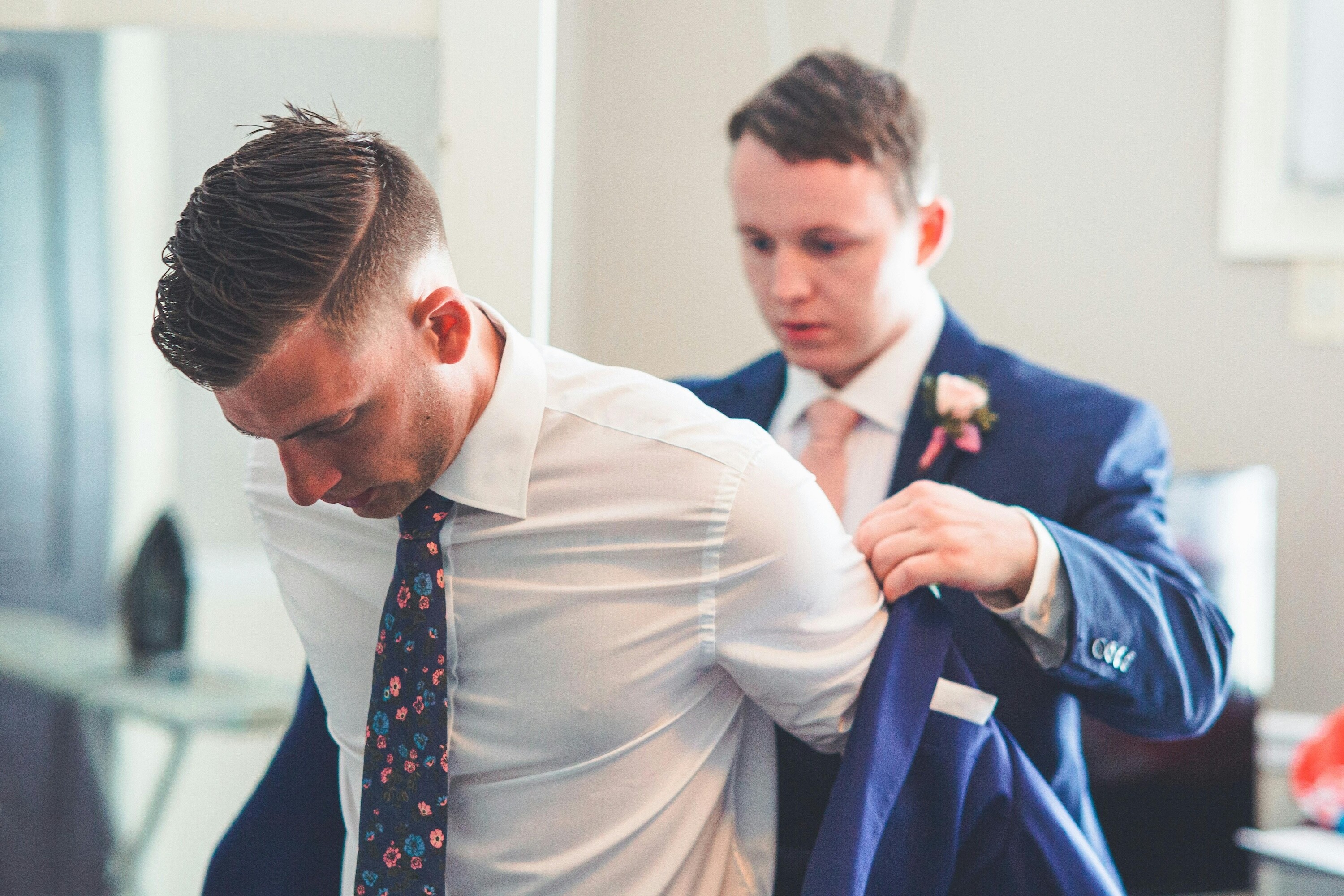
The best man speech
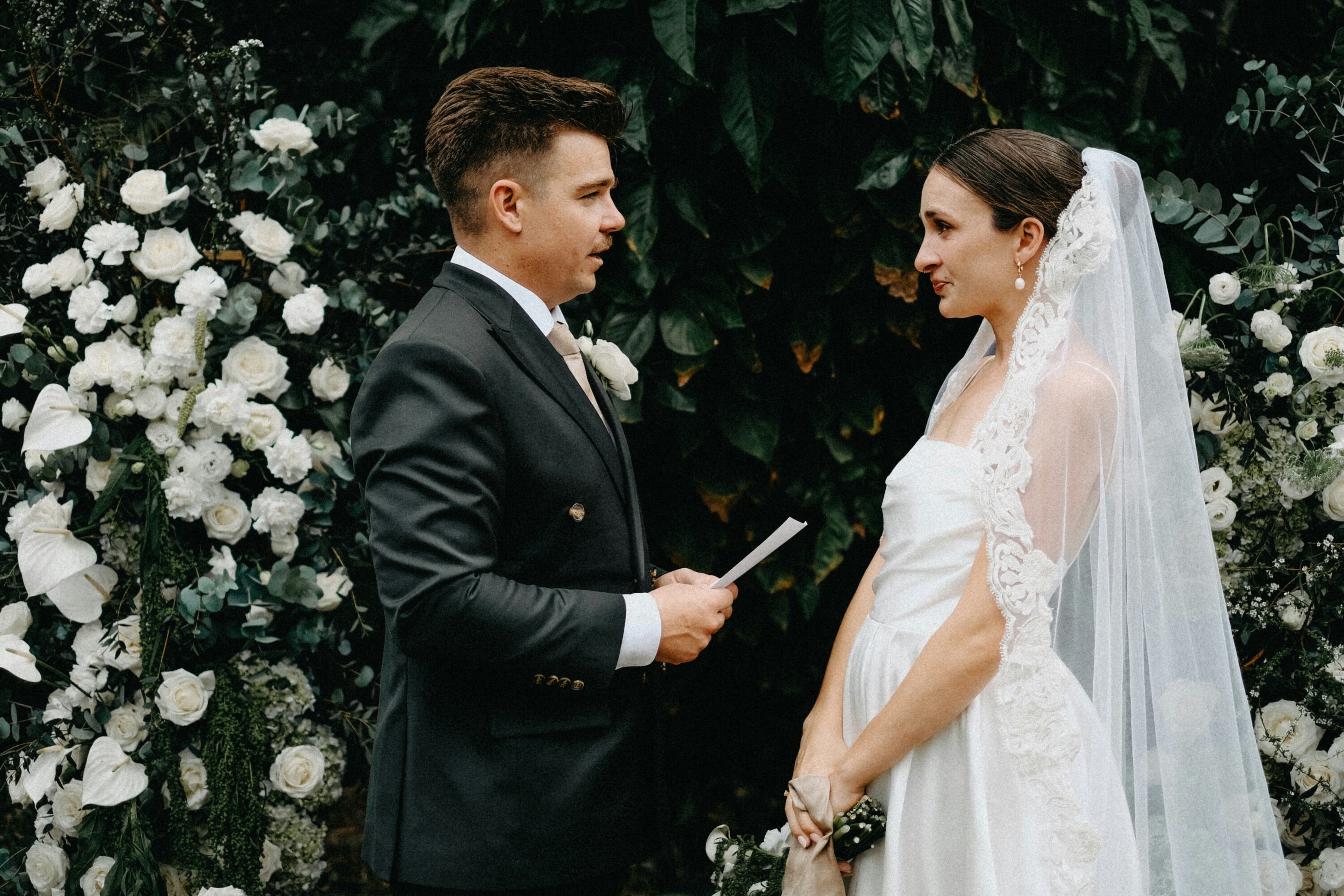
One of the most iconic best man duties is the speech. It's your chance to honour the couple, entertain the guests and wrap up the day beautifully. When writing and delivering:
- Be personal and sincere - share a story that shows the groom's character.
- Be appropriate - humour is great, embarrassment is not. Keep it classy.
- Practice beforehand - nervousness is normal, but being familiar with your lines helps delivery.
A great speech stays memorable for all the right reasons.
Lead, don't just manage
A great best man does more than complete tasks. You set the tone for the groom's experience, support the wedding team, and reassure the groom that everything is organised. It's not about bossing people around - it's about knowing what needs doing before anyone asks.
Is the best man a groomsman?
Usually, yes. The best man is typically part of the groomsmen group, but with extra responsibility. They act as the groom's main support and take the lead on key tasks, while other groomsmen provide backup and support.
Common best man mistakes to avoid
- Leaving stag do organisation to the last minute
- Not confirming responsibilities with groomsmen
- Assuming someone else is handling the rings or ceremony timings
- Rambling or inappropriate speech content
- Ignoring the schedule on the wedding day
Quick best man checklist
- Arrange stag do
- Attend suit fittings
- Brief groomsmen on responsibilities
- Confirm rings plan
- Check timeline and contacts list
- Support groom on the day
- Deliver a thoughtful speech
Can you have more than one best man?
Absolutely! You can have two best men if you'd like to (or a best woman / best person). It's perfectly legitimate option and it makes the workload easier.
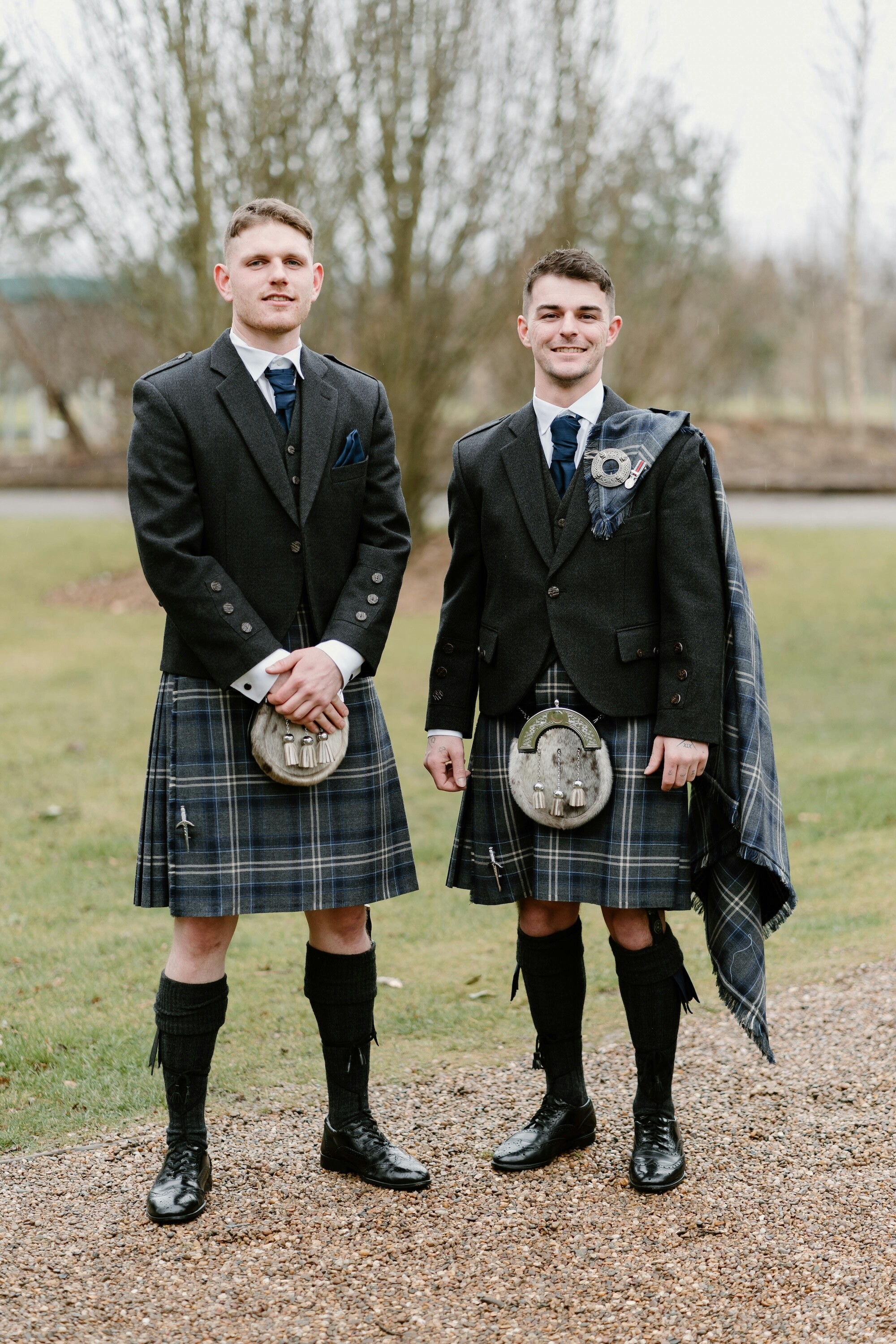
Groomsmen Duties: What The Role Really Involves
Groomsmen are the groom's support squad. Their role is to back up both the groom and the best man, helping share the workload so everything doesn't fall on one person. While they don't usually lead planning in the same way as the best man, groomsmen play a key part in keeping things organised, relaxed and running smoothly.
Modern groomsmen duties go beyond simply turning up in a suit. From the planning stages through to the wedding day itself, they're there to help, step in when needed and keep the energy positive.
Before the wedding: support and preparation
In the lead-up to the wedding, groomsmen help keep plans on track and support the groom practically and socially:
- Attend suit fittings and make sure outfits are ordered, fitted and ready on time
- Support the stag do by helping with planning, travel or logistics if needed
- Help with planning tasks such as collecting items, setting things up or running errands
- Be available for decisions, checks and last-minute questions as the day approaches
They're also there to keep the groom grounded, offering reassurance and perspective if planning starts to feel overwhelming.
On the wedding day: practical help and presence
On the wedding day, groomsmen help make sure everything flows as planned:
- Arrive on time and prepared, dressed correctly and ready to help
- Support the groom while getting ready, helping keep things calm and on schedule
- Be flexible and step in if something changes or extra help is needed
- Take part in photos and ceremony roles as planned
In many weddings, groomsmen also assist with usher-style tasks, especially in smaller wedding parties.
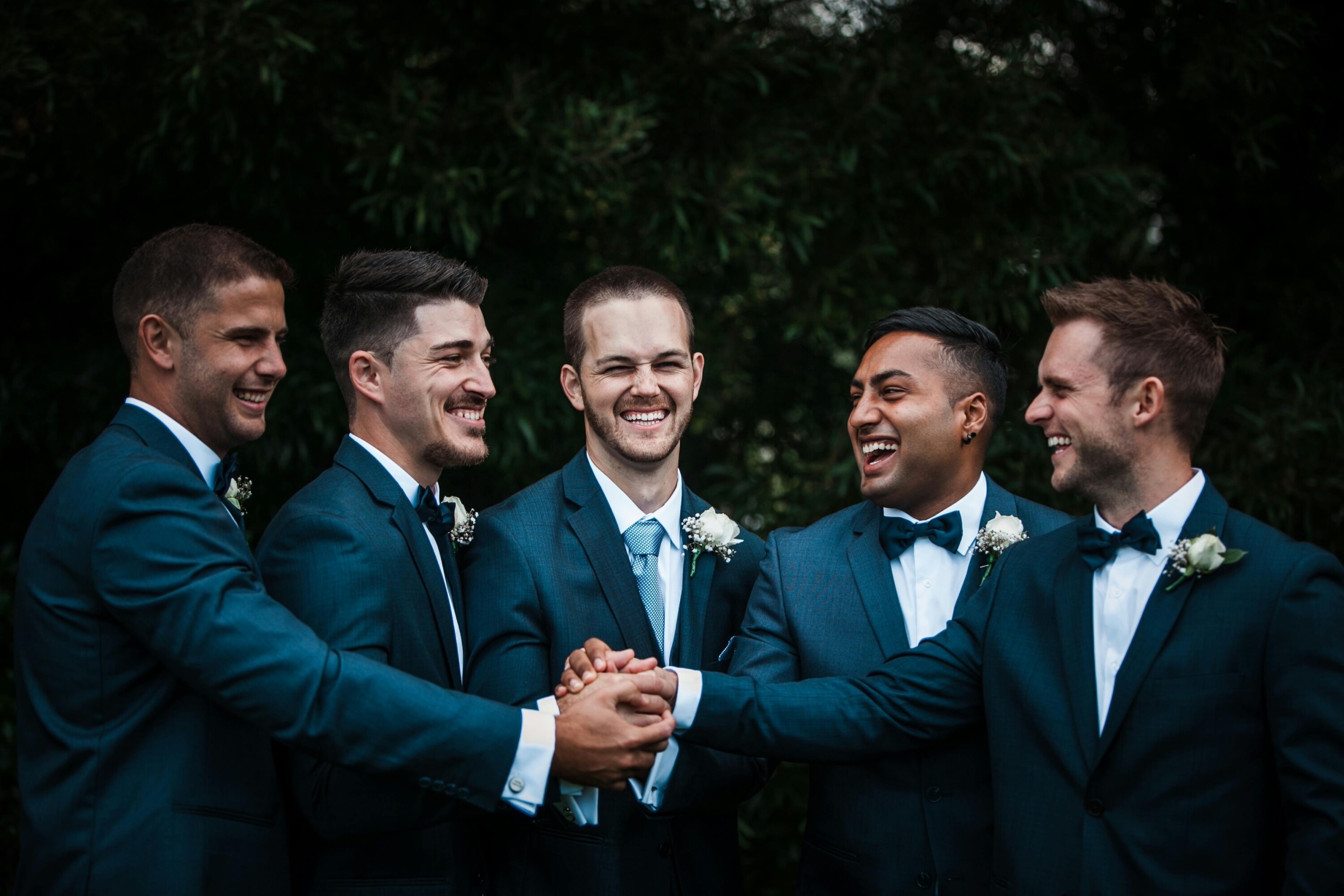
How many groomsmen should you have?
There's no set number. Some couples choose two or three, others have a larger group. The right number depends on:
- The size of your wedding
- How formal the ceremony is
- How many people you want involved.
Aim for a group size that feels manageable and balanced rather than choosing numbers for tradition alone.
What do groomsmen wear?
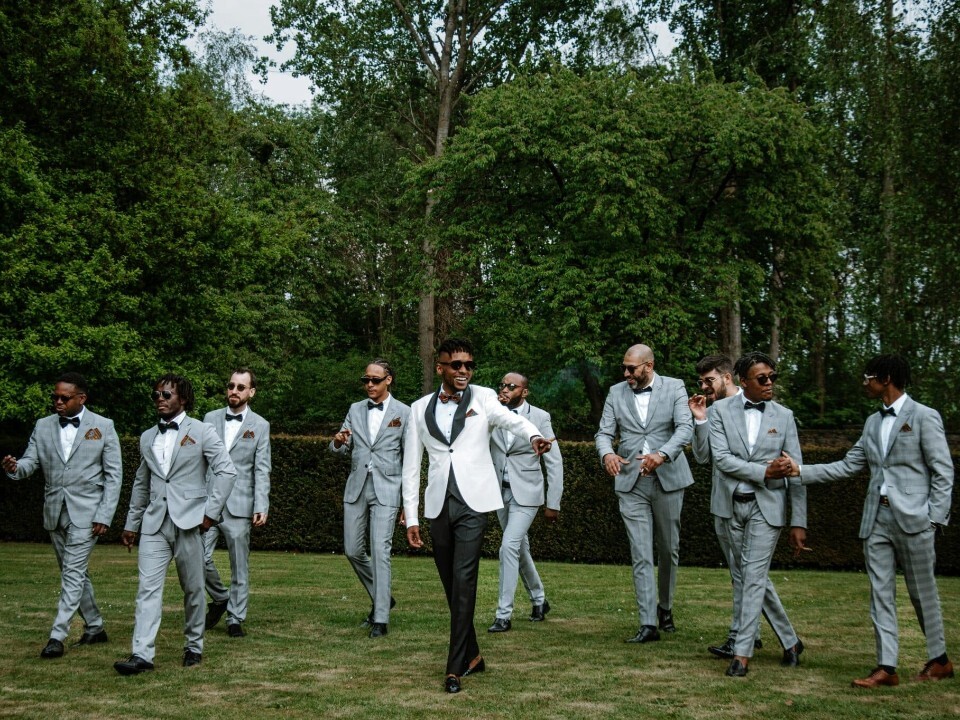
Groomsmen usually coordinate with the groom's outfit, either wearing matching suits or complementary styles. Small differences like ties, waistcoats or buttonholes can help distinguish the groom while keeping the overall look cohesive.
Comfort matters. Well-fitted suits and sensible shoes make a big difference to confidence and energy on the day.
Common groomsmen mistakes to avoid
- Turning up late or unprepared
- Not confirming timings or responsibilities
- Assuming someone else is handling key tasks
- Ignoring the schedule on the wedding day
Quick groomsmen checklist
- Attend fittings and planning check-ins
- Support the stag do where needed
- Be clear on wedding-day timings
- Arrive early and ready to help
- Support the groom throughout the day
- Step in if plans change
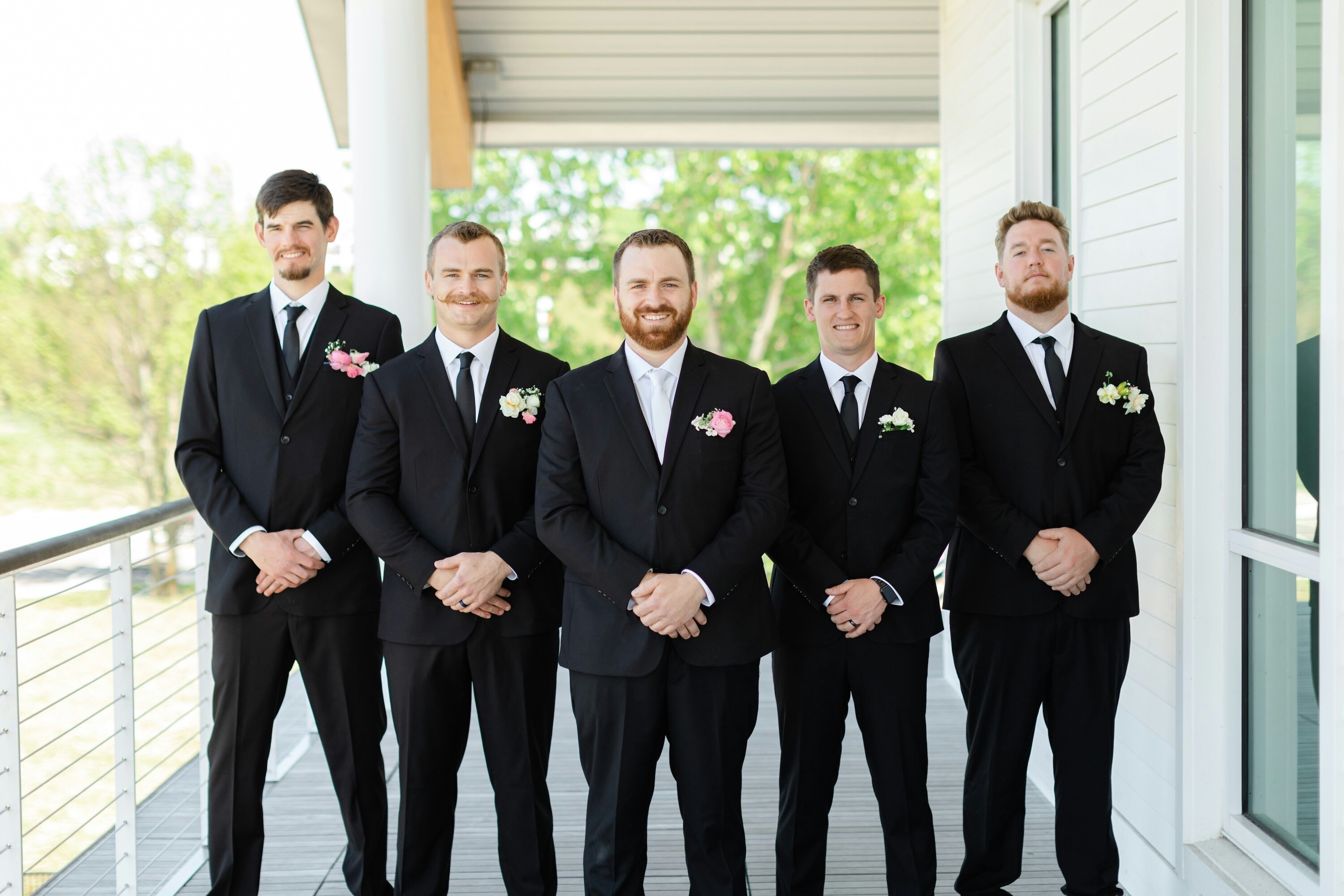
Ushers vs Groomsmen: What's the Difference?
This is the biggest confusion point, so here's the clean explanation:
- Ushers are mainly guest-facing. They help people find seats, hand out orders of service, and guide guests to the right places at the right times.
- Groomsmen are mainly groom-facing. They support the groom (and best man) and are often part of the main "standing with the groom" group.
Can groomsmen also be ushers?
Yes. In smaller weddings, it's very common for groomsmen to take on usher duties as well. In larger wedding parties, the roles are often split so everything runs more smoothly. Either way, the key thing is clarity. Whether the roles are combined or kept separate, make sure your groomsmen and ushers know exactly what they're responsible for on the day, so guests are looked after and no one's second-guessing what they should be doing.

Ushers: what they do and how to make the role work
Ushers are an important part of the wedding support crew, focused on guest experience and keeping the day running smoothly. They help set the tone from the moment guests arrive and are especially useful at larger weddings or venues with multiple spaces.
Who can be an usher?
Ushers can be friends, siblings, cousins or family members, anyone you trust who's sociable, reliable and comfortable helping guests. There are no rules around gender, and age matters less than confidence and approachability.
What do ushers do before the wedding?
Ushers don't usually take on planning responsibilities like the best man or groomsmen, but preparation still matters. Before the day, it helps if they:
- Attend a short briefing so they understand timings and expectations
- Know the venue layout (entrance, ceremony space, toilets, exits)
- Arrive early on the wedding day, ideally 30–60 minutes before guests
Being informed means fewer questions and smoother guest flow.
Ushers are most visible before and at the start of the ceremony, and their role directly affects how relaxed and organised the day feels.
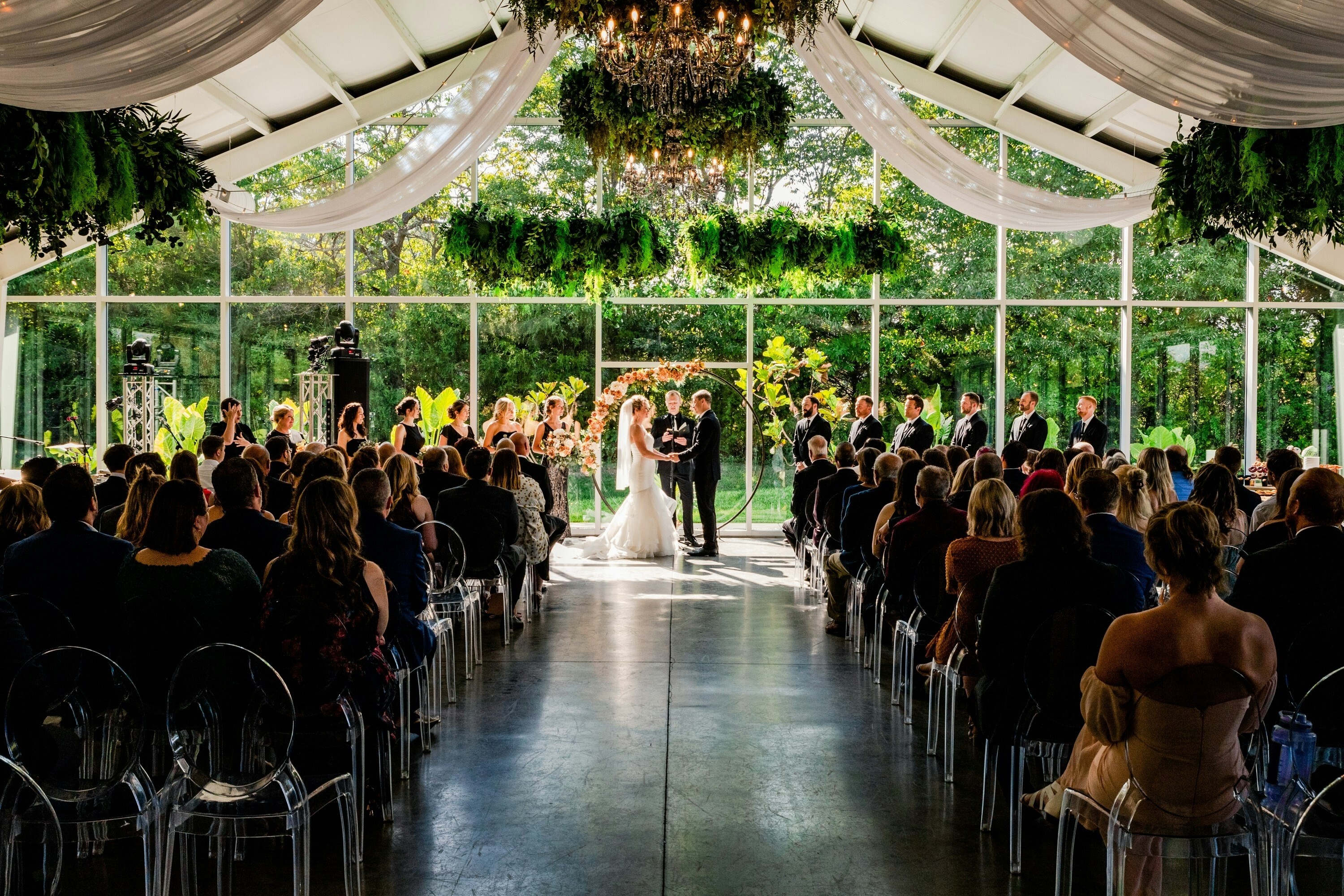
Usher duties on the wedding day
Greeting guests
- Welcome guests as they arrive
- Hand out programmes, orders of service or ceremony details
Seating guests
- Escort guests to their seats calmly and efficiently
- Follow any seating plan, including reserved seating
- Assist elderly guests or anyone who needs extra help
Handling late arrivals and questions
- Seat latecomers discreetly once the ceremony has begun
- Answer simple guest questions about timings, facilities and locations
After the ceremony
- Guide guests to the drinks reception, confetti area or transport
- Help direct people for photos or towards the wedding breakfast if needed
Their role isn't just practical, it sets the mood and helps guests feel welcome and looked after.
How many ushers should you have?
There's no fixed number, but a good rule of thumb is around one usher per 50 guests. Smaller weddings may only need one or two, while larger guest lists or complex venues benefit from having more to keep things moving smoothly.
Do ushers wear the same outfits as groomsmen?
Not necessarily. Ushers should coordinate with the overall wedding style, but they don't need to match the groomsmen exactly. Subtle differences like ties, pocket squares or accessories help them look part of the wedding team without being confused with the main wedding party.
Quick usher checklist
- Arrive early and get briefed on duties
- Greet guests warmly on arrival
- Hand out programmes or orders of service
- Seat guests according to the plan
- Escort latecomers discreetly
- Answer guest questions and give directions
- Help guide guests after the ceremony
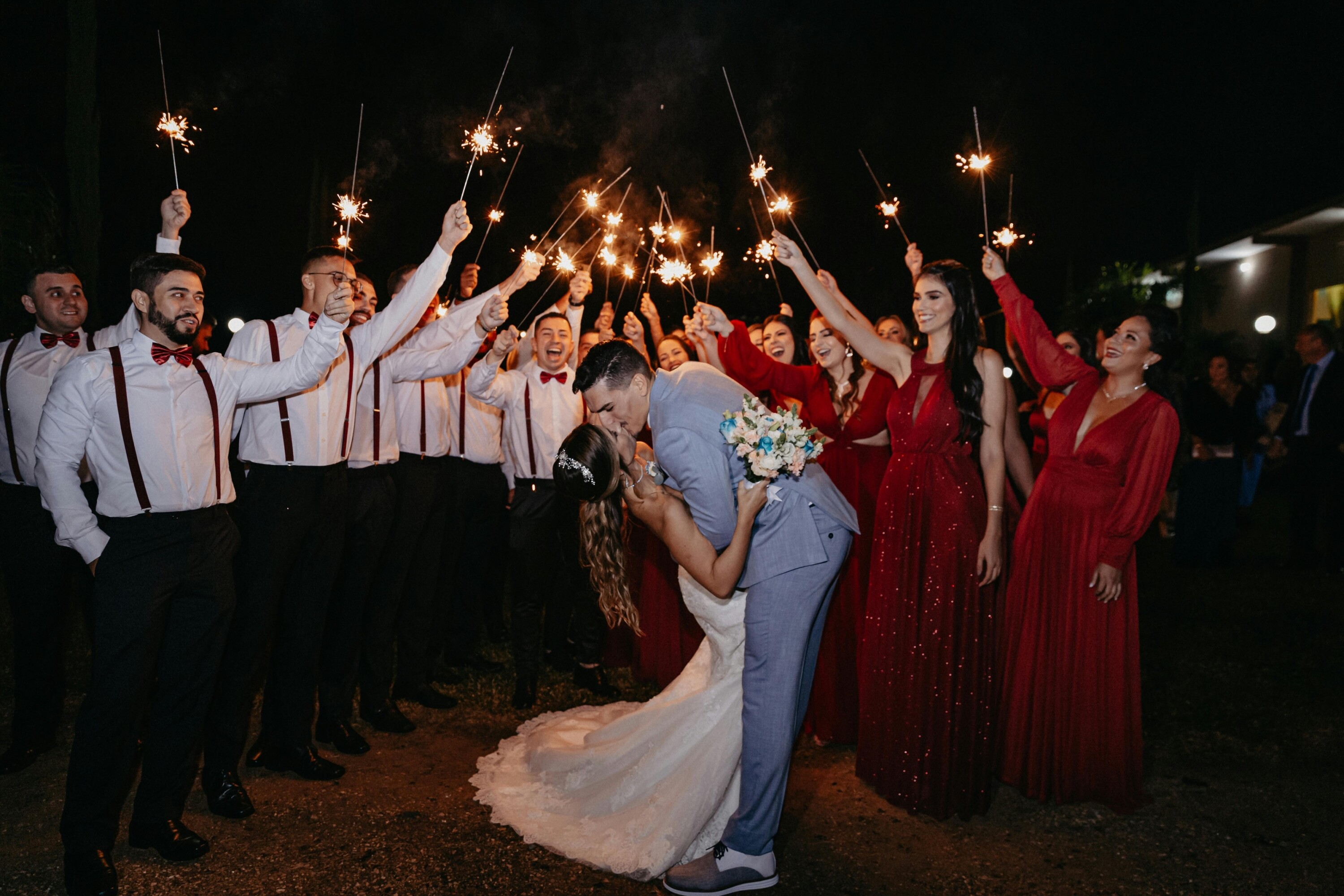
Page boys: what they do and how they fit into your wedding
A page boy role is perfect if you want to include a child in your wedding without adding pressure or responsibility. It's a simple, age-appropriate role that helps them feel involved while keeping things fun, manageable and stress-free for everyone.
Traditionally, page boys were responsible for holding or managing the bride's train. In modern weddings, the role has evolved and is now more flexible, with page boys often walking down the aisle ahead of the bride, alongside a flower girl, or as part of the main procession.
What does a page boy do at a wedding?
Page boys usually have a short, ceremonial role during the ceremony, followed by photos. Common duties include:
- Walking down the aisle before the bride
- Carrying a sign, small cushion or decorative item
- Carrying the rings (if you're not having a separate ring bearer)
- Standing briefly at the front before sitting with family
The role is mostly symbolic, so it's best kept simple, especially for younger children.
How old should a page boy be?
There's no strict age rule, but page boys are usually between 3 and 10 years old. Younger children may need support from an adult or to walk with another child, while older children can manage slightly more responsibility if they're confident. If a child is very young, it's worth treating the role as optional on the day. If they decide not to walk down the aisle, that's completely fine.
Can a page boy carry the wedding rings?
Yes, but with caution. Many couples choose to have page boys carry the rings on a cushion or in a box, especially for photos. If you do this, it's a good idea to:
- Use symbolic or dummy rings
- Keep the real rings with an adult (often the best man)
- Have a clear backup plan if nerves kick in
How many page boys should you have?
Most weddings have one or two page boys, but there's no right or wrong number. The decision usually depends on:
- How many children you want to include
- The size of your wedding party
- How simple you want the ceremony to feel
Keeping numbers small helps avoid distractions during the ceremony.
What do page boys wear?
Page boys often wear a child-friendly version of the groom or groomsmen's outfit, such as a mini suit or waistcoat and accessories that match the rest of the party (e.g. a matching colour bow tie or tie). Comfort matters more than perfection for this role. Shoes should be easy to walk in, and outfits shouldn't restrict movement.
Do you have to have a page boy?
Not at all. Page boys are completely optional. Some couples love the tradition and the visual moment, while others prefer a more streamlined ceremony without children involved. If you do include page boys, keeping expectations light makes the experience better for everyone.

How many people should you have in the Groom's party?
There's no strict rule when it comes to numbers, and the right balance will depend on the size and style of your wedding. That said, having a rough guideline helps things feel organised rather than overcrowded. These general suggestions tend to keep things practical, visually balanced, and manageable on the day, without creating unnecessary complexity.
- Best man: 1 (or 2 if you want to split duties)
- Groomsmen: 2 - 6 is common, but do what fits your guest list and budget
- Ushers: enough to cover the entrance and seating (2 - 4 for most weddings)
- Page boys: 0 - 2 is plenty (unless you're doing a full kid entourage)
