



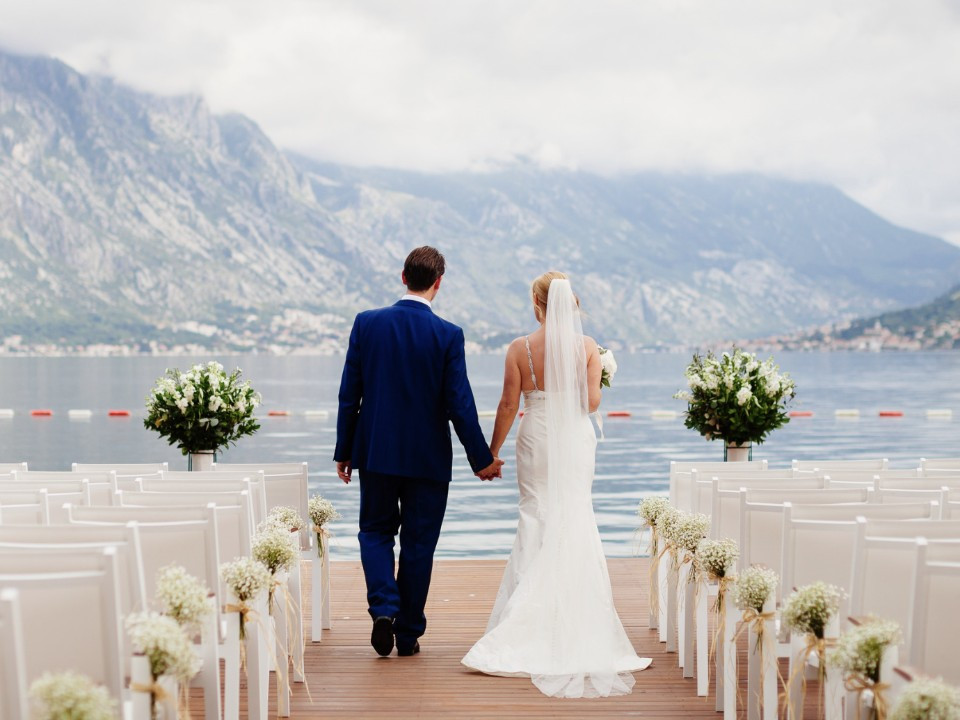

Want to say "I do" against the backdrop of the Tuscan hills, the Santorini sunset, or the Maldives beaches?
It's a dream for many UK couples, but many get swept up in romantic daydreaming and forget the logistical and legal groundwork required.
A destination wedding is more than possible, just ensure you get the paperwork and planning right first. Here's what you should know.
Check whether your marriage will actually be legal back in the UK
Before anything, know that getting married overseas doesn't automatically mean your marriage will be legally recognised in the UK. Your overseas marriage will only be recognised in the UK if:
- It was a legally recognised marriage in the country it took place, fully complying with local marriage laws.
Check the local marriage laws with the authorities in your chosen country, and see if you're eligible. Certain residency, religious, or cultural requirements might make a fully legal ceremony there impossible or impractical.
For example, same-sex marriage is not legally recognised in every destination, so couples should check the current laws for their chosen country before making arrangements. If a legal ceremony isn't possible, some couples choose to have a legal ceremony in the UK and a symbolic celebration abroad.
In such cases where a couple cannot legally marry in their destination country, many perform the symbolic ceremony abroad but complete a legal civil wedding in the UK beforehand or afterwards.
- Both partners are also legally free to marry in the UK
This means that both partners are over 18, not blood relatives, and not already married. Depending on the country, you may need a UK Certificate of No Impediment (CNI) from your local register office as proof you're free to marry under UK law. Check with your register office and the destination country's authorities to confirm what's required.
If one partner isn't a British national, don't assume the UK process covers both of you. Your partner may have separate eligibility requirements under their country's marriage laws (and vice-versa; you might not be covered by their country's marriage laws too).
Note also that your marriage abroad won't be registered in the UK and you won't be able to get a UK marriage certificate. Your marriage will still be legally recognised, however. Get a marriage certificate from your destination country as you'll likely need it for legal matters in the UK. If needed, get the marriage certificate translated by a qualified translator.
Due to these requirements, destinations such as Cyprus, Malta, Gibraltar, and Portugal are popular partly because their processes are relatively straightforward for British couples.
For more information and resources, head to GOV.UK's "Getting married or registering a civil partnership abroad" page.
Give yourself more time than you think you need
Many couples underestimate the time needed to get everything in order and end up stressed trying to rush things. First, getting your CNI may take up to several weeks. Usually, there's a notice period, and if your destination requires an apostille, that can add further time. Timescales can vary, so check with your local register office and the Legalisation Office for current processing times.
You may also need extra time to sort other documentation: passports with enough remaining validity, decree absolute or death certificates if you've been previously married, and sworn translations or embassy attestation if you're marrying somewhere outside the Hague Apostille Convention. As a rule of thumb, wedding planners recommend starting the legal paperwork four to six months before travelling.
For your actual wedding, finalise your guest list early. The earlier you talk with them about schedule availability or how much they're willing to spend on travel, accommodation, and other expenses like excursions, the better.
Take your time in choosing a reliable local wedding planner as well. They should speak English fluently, know the area's suppliers, and can help you deal with local authorities. Schedule even more time if you won't be hiring a planner, as you'll be booking venues, photographers, and caterers yourself. Go on video calls with them, visit the venue if possible, and get contracts in writing.
Tip: Many couples do their supplier research while already travelling for venue visits. A VPN with UK servers can be useful for keeping your browsing experience closer to what you're used to at home while searching for suppliers from abroad.
Budget for more than just the wedding day
Destination weddings, particularly those with smaller guest lists, can sometimes cost less than a larger UK celebration. However, there are additional expenses to consider beyond the wedding day itself.
However, that's only for the ceremony itself. Budget for flights and accommodation for yourselves, legal document fees, translation costs, and travel insurance. Packages often include a "resident's fee" that doesn't always get flagged upfront.
Where possible, use credit cards for any required deposits on venues, photographers, and other expenses. Section 75 of the Consumer Credit Act can offer protection for credit card payments within certain thresholds, which may help if a supplier fails to deliver. It's worth checking whether your payment method and situation qualify. Generally, e-wallets and debit cards don't carry the same level of protection.
If your wedding trip is booked as part of an ATOL-protected package, this can provide financial protection if the ATOL holder stops trading. Check your booking and ATOL certificate to understand exactly what is protected.
Other odds and ends worth sorting early
Ask your guests to ensure they have passports with enough remaining validity. Many countries have minimum validity requirements.
Look into visa requirements, even for short stays, and confirm what your travel insurance covers for supplier cancellations or lost rings.
Finally, keep copies of every document, digital and physical: passports, CNIs, birth certificates, and any translations. You do not want the stress of lost paperwork during what's supposed to be one of the best times of your life.
A wedding abroad can be a wonderful way to celebrate, as long as you plan for the legality and logistics of it all as carefully as you plan the flowers and the frocks!