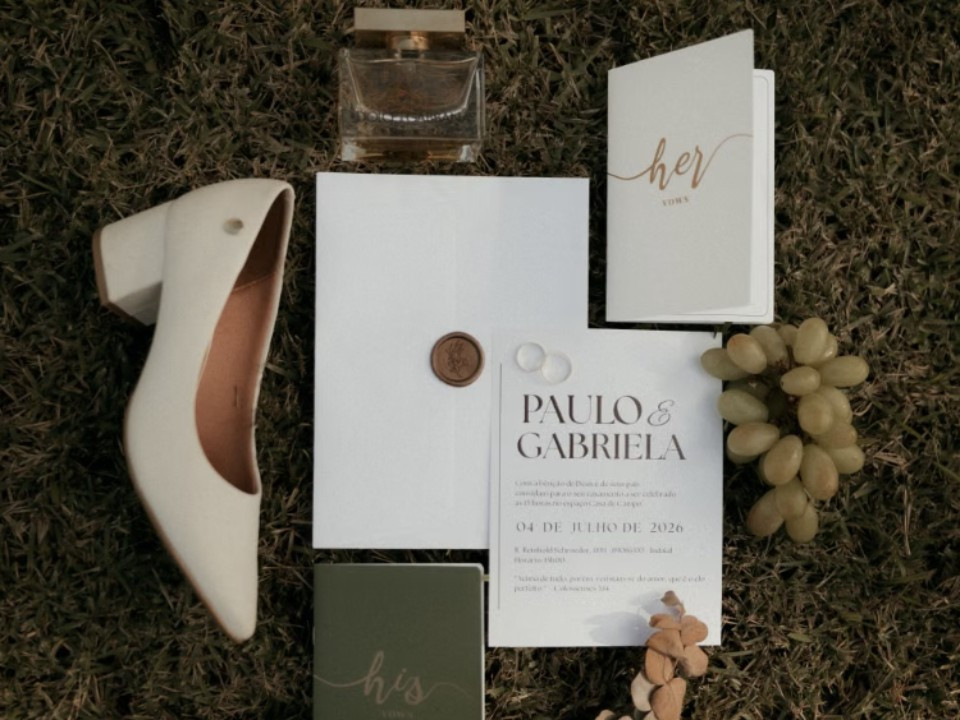

From the invitation to the reply card, a practical guide to the words that go on your wedding stationery, with examples you can adapt.
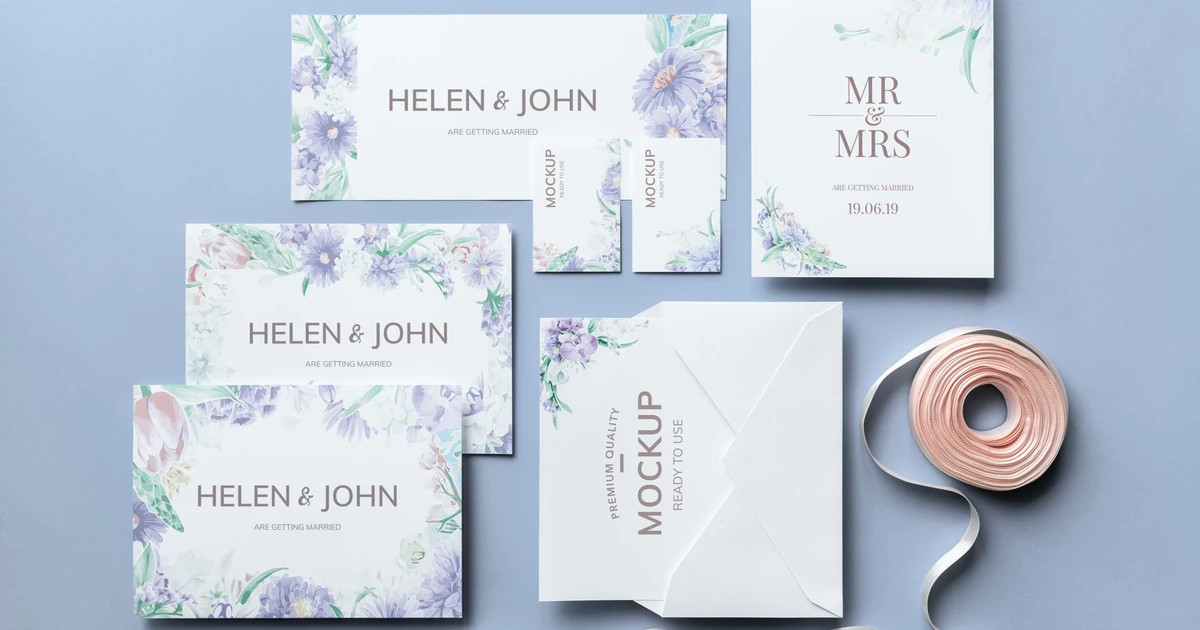
Choosing your wedding stationery can be one of the more enjoyable parts of wedding planning. You settle on a design and a colour palette, and it all starts to feel like progress.
Then someone asks what the invitation is actually going to say, and everything stalls.
Wording is where most couples get stuck, because every piece follows conventions nobody explains. Treat them as a starting point rather than a rule: the right wording is the one that fits your day and your families.
The Wedding Invitation
The wedding invitation itself usually carries five things: who's inviting, who's getting married, when, where, and what follows the ceremony. Anything beyond that often sits better on a separate card.
Who is hosting
Traditionally the bride's parents host and their names come first, though many couples now host themselves or share it between both families.
If the bride's parents are hosting:
Mr and Mrs James Whitfield
request the pleasure of your company
at the marriage of their daughter
Eleanor Rose
to Mr Thomas Blake
Eleanor's surname can be left off, as it's already on the first line.
If you're hosting yourselves, you can lead with your own names instead:
Eleanor Whitfield and Thomas Blake
invite you to celebrate their marriage
The request line
On a formal British invitation, the request line traditionally reads "request the pleasure of your company", whether the ceremony is in a church or a barn.
“Request the honour of your presence” is another traditional option, particularly for religious ceremonies, although either phrase can be adapted to suit your wedding.
For an informal wedding, "invite you to celebrate their marriage" or "would love you to join them" suits a relaxed card nicely.
The date, time and venue
Formal invitations traditionally spell the date out in full, while modern ones often use numerals. Either works, and keeping to one style looks neatest.
Saturday the eleventh of September
two thousand and twenty-seven
at half past one o'clock
St Mary's Church, Painswick
It's usually best to print the time the ceremony starts rather than the time you'd like guests to arrive.
What follows
British weddings have a term that confuses overseas guests and delights everyone else: the wedding breakfast, the meal after the ceremony, whatever the hour. If the reception is elsewhere, name the venue.
Wedding breakfast and dancing to follow
Reception to follow at Cowley Manor
Wedding Invitation Wording for Different Family Situations
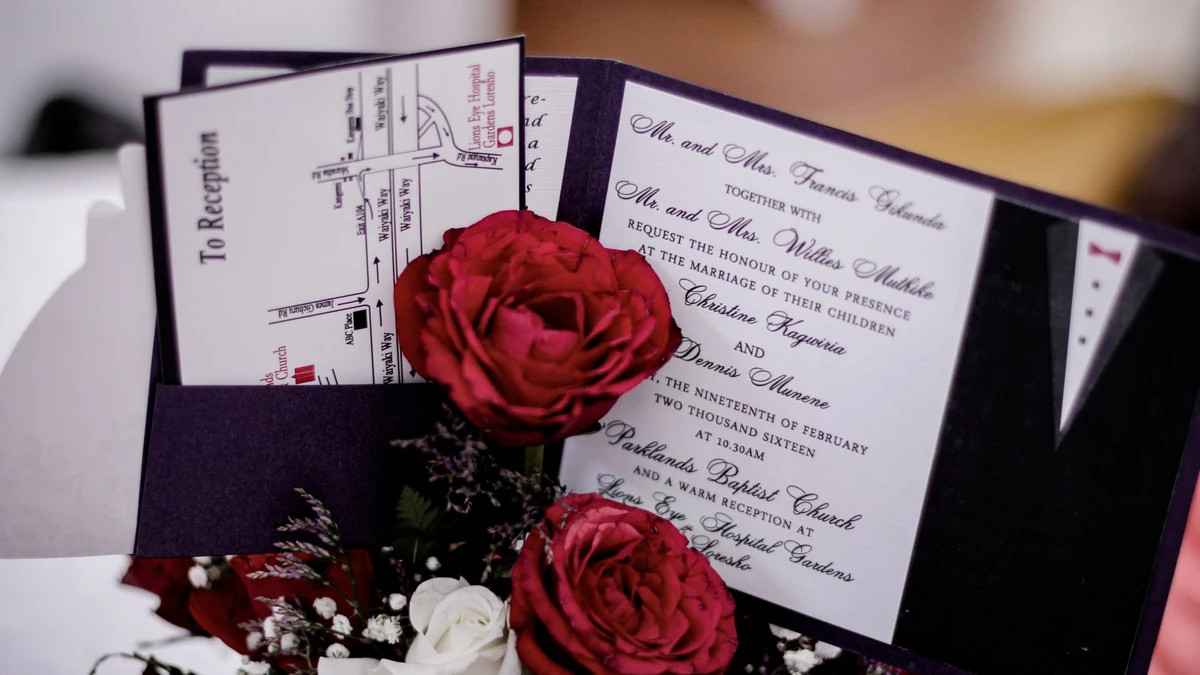
Every family is different, and traditional wedding invitation wording doesn't always reflect this. Whether your parents are divorced, you have stepparents or you'd like to honour a loved one who has passed away, there are thoughtful ways to word your invitations that feel right for you.
Divorced parents, both hosting
There's no single right way to word this. Divorced parents are often listed on separate lines rather than joined by "and", which can suggest a married couple. The mother's name traditionally comes first, but any order that suits your family works.
Mrs Helen Whitfield
Mr James Whitfield
request the pleasure of your company
at the marriage of their daughter
Eleanor Rose
Several parents and stepparents
Once you're naming four or five people, the host line can start to look like a list. "Together with their families" includes everyone and avoids decisions about order, which many families find easier.
Together with their families
Eleanor Whitfield and Thomas Blake
invite you to celebrate their marriage
Honouring a parent who has died
Traditionally, a parent who has died isn't named as a host, though they can still be included alongside your name.
Eleanor Rose Whitfield
daughter of Mr James Whitfield
and the late Mrs Helen Whitfield
Evening Invitations
This is the piece most wedding stationery guides skip, because the day and evening split is largely British.
If some guests are invited only to the evening, a separate invitation tends to work best, worded so it's clear what they're invited to:
Mr and Mrs James Whitfield
request the pleasure of your company
at the evening reception following the marriage of their daughter
Eleanor Rose to Mr Thomas Blake
Saturday 11 September 2027
from 7.30pm
Cowley Manor, Gloucestershire
It helps to give a clear start time, since evening guests have no ceremony to anchor to, and to say whether food is provided: "Evening buffet from 9pm" does it in four words.
RSVP Cards
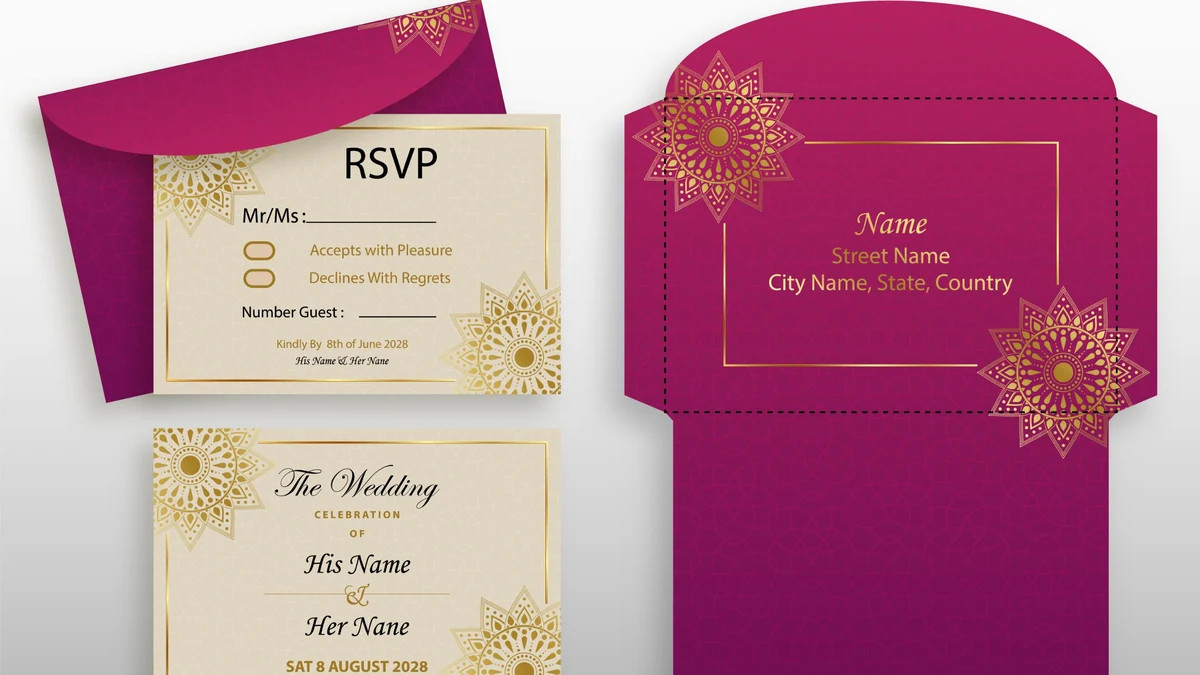
The reply card only needs a deadline, a space for names and a clear way to respond.
Kindly reply by 24 July 2027
M ______________________________
___accepts with pleasure
___ declines with regret
The lone "M" is a traditional stationery convention: guests finish it as Mr, Mrs, Ms or Miss.
Details Cards: What The Invitation Can Leave Out
Think of the invitation as the headline and the details card as the small print. The card, or your website, is the natural home for:
- Travel, parking and accommodation
- Dress code, if you’re giving one
- Whether children are invited
- Gift information, if you’re giving any
Children
If your wedding is adults only, it helps to say so warmly here rather than on the invitation.
We love your little ones, but we have chosen to make our wedding an adults-only celebration.
We hope you'll enjoy an evening off with us.
Gifts, and the question of money
Traditional etiquette leaves gifts off the invitation itself, so many couples mention them on a details card or website instead.
If you'd like to ask for a contribution, a short verse known as a money poem is one gentle way to do it. If a poem isn't quite your style, a simple sentence works just as well.
Your presence at our wedding is the only gift we need.
If you would like to give something, a contribution towards our honeymoon would be very welcome.
Sizes, Printing and Postage
Most UK wedding invitations are A5 or A6: A5 gives your wording room to breathe, while A6 is more economical and works well for a relaxed wedding.
Heavy card or a wax seal can tip a standard Royal Mail Letter (up to 24 x 16.5cm, 5mm thick and 100g) into a pricier Large Letter, so it's worth weighing one finished invitation before you buy stamps.
It pays to settle your wording before finalising the design. If you're working from wedding templates rather than commissioning a designer, this is simpler still: you can drop the text in and see straight away whether it fits.
When to Send Each Piece
A rough timeline, working back from the wedding day:
| Piece | When |
|---|---|
| Save the dates | 6-12 months before |
| Day and evening invitations | Around 3 months before |
| RSVP deadline | 6-8 weeks before |
| Thank you cards | Within 3 months after |
Getting It Right
Wedding stationery wording isn't really about etiquette. It's about making sure a hundred people know where to be, when to arrive and how to reply, without having to ask you.
Traditional conventions are useful because they solve those problems in ways people already recognise. Where a convention doesn't fit your family or your day, adapt it. Nobody is marking your invitation against a rulebook. They're checking whether they need a hotel.