


The right wedding suit depends on the formality of your wedding, venue, season, budget and whether you want to wear it again. Traditional options include morning suits for formal daytime weddings, dinner suits for black-tie celebrations and lounge suits for most modern weddings, while tweed and linen work well for more relaxed or seasonal settings.
We spoke to Alex Edwards, menswear expert and founder of The Cotswold Tailor, who has spent almost fifteen years dressing hundreds of grooms a year, to answer the questions every groom (and every guest) should be asking before wedding season.
What's the first decision a couple needs to make?
Budget, before anything else. Alex says working this out before you even step into a menswear store shapes every decision that follows.
"I think the most important thing as a couple you need to do before entering any menswear store is work out what your budget's going to be. If you know your budget, it then dictates every stage from there on out. So for example, if you've got a couple of hundred pounds that you're willing to spend on a suit, that's more hire wear, or if you go up to a couple of thousand pounds, then you have the option to have something made bespoke for your wedding."
Once your budget is set, everything else, from suit style to whether you hire, buy or tailor, becomes a much easier decision.
Watch: A Groom's Guide on What to Wear, Hire or Buy
Do menswear shops list their prices online?
Not always, and Alex says this is one of the most common frustrations he hears about. Many businesses keep pricing off their websites, so it's worth doing your homework before you book an appointment.
His advice is simple: pick up the phone or email ahead of time so you're not wasting anyone's time, yours included, by turning up somewhere that's out of budget.
What are the main suit styles for grooms?
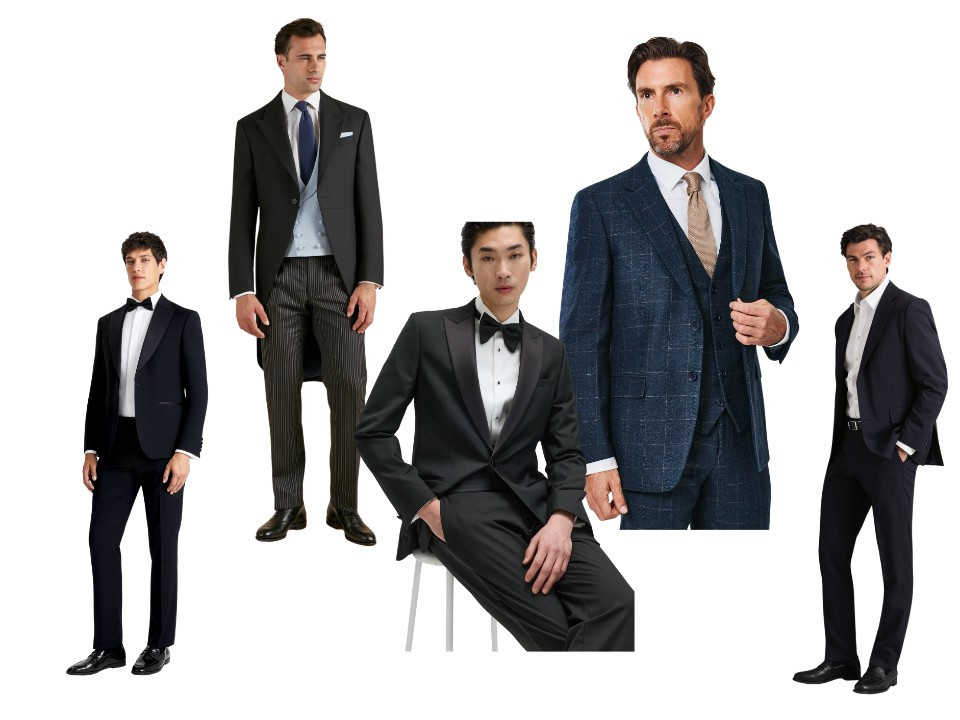
There are three main styles to know:
- Morning suit – think Royal Ascot: top hat and tails. This is the most formal, traditional option.
- Dinner suit – also known as black tie, in midnight blue or black. A formal look, often chosen for evening weddings.
- Lounge suit – jacket and trousers cut from the same fabric, so the top and bottom match. This is the classic, versatile wedding suit.
A newer category is also creeping into weddings: smart casual, typically a jacket, shirt and chinos. According to Alex, morning suits are becoming less common, dinner suits are having a moment again, but lounge suits and the smart casual look remain by far the most popular choice for grooms.
How does the venue or time of day affect the suit choice?
Location and venue both matter. A formal venue naturally leans towards a more formal suit, such as a morning suit, while relaxed countryside weddings and barn venues are seeing a real swing towards tweed.
Destination weddings have also had a big influence this year. Alex has noticed more grooms opting for linen-woollen blends in lighter, pastel shades, prioritising comfort in warmer climates over the traditional heavier suit.
Does fabric weight really make a difference?
Yes, and it's about more than just how a suit looks. Heavier tweeds suit autumnal weddings, while anything from spring through to a July wedding calls for a much lighter fabric.
Alex is clear on one point in particular: avoid pure linen.
"A lot of people ask me, should I go for a linen suit? And I always advise them to go for a linen blend, because pure linen creases. I mean, the moment you step out of the car you'd be in a creased suit. My advice would be, if you're having a summer wedding or a destination wedding, look for a linen-woollen blend."
What's the story with tweed for barn and countryside weddings?
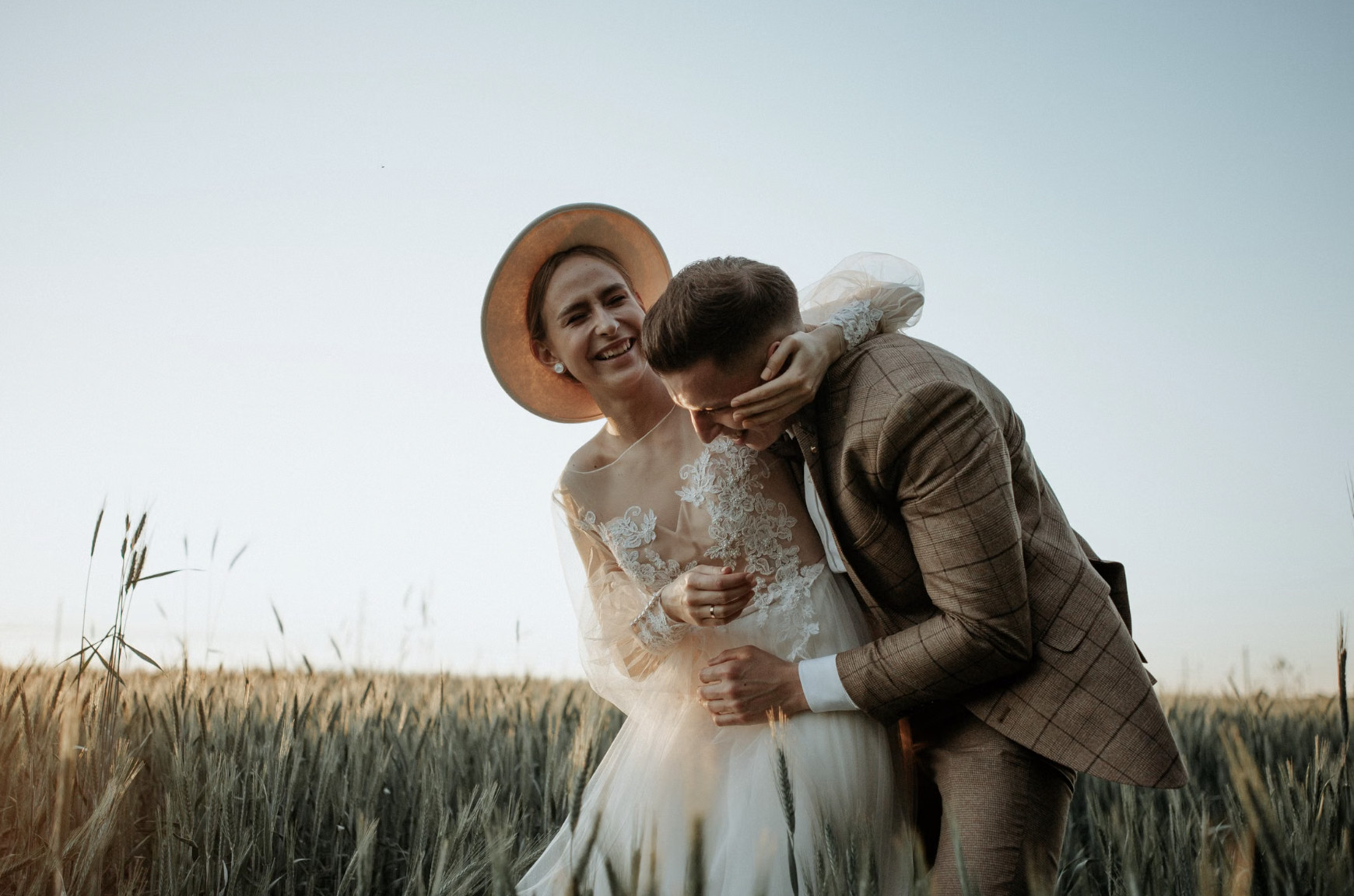
Tweed remains hugely popular for relaxed, countryside-style weddings, and it works well styled with a pair of chinos rather than a full matching suit. Many grooms go for a tweed jacket with a white or blue shirt and navy chinos.
Alex, self-confessed traditionalist that he is, prefers a full three-piece tweed suit, with one styling trick he particularly loves for the groom: a contrasting waistcoat, using the same tweed pattern but in a slightly different colour variation to the jacket and trousers.
Should the groom's outfit be different from the groomsmen?
Alex believes it's important the groom stands out, after all, it is his day. But that doesn't mean a completely different outfit is necessary.
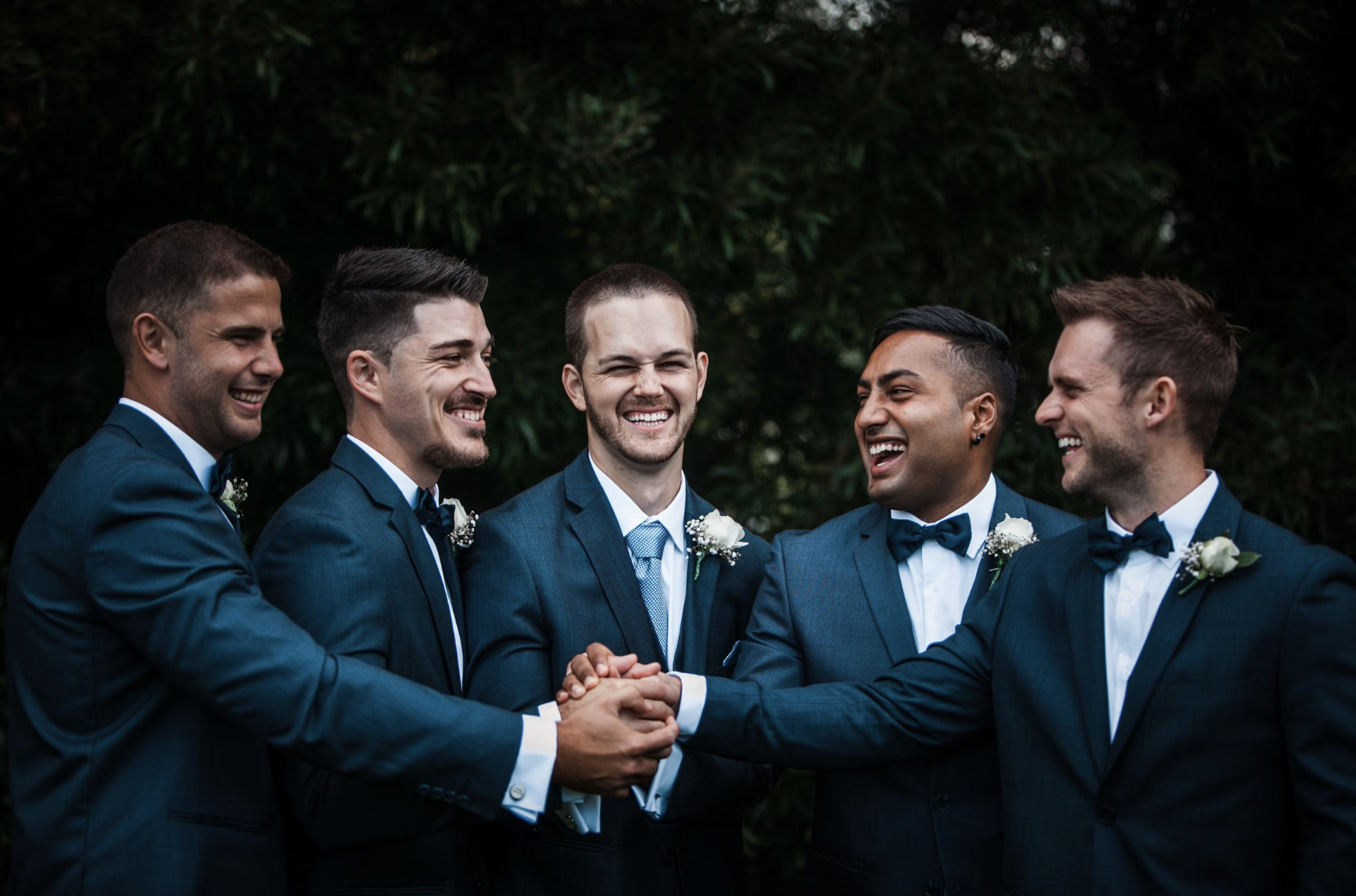
For couples who want everyone in matching suits, a different tie or buttonhole can be enough. His preferred approach, however, is for the groomsmen to wear a matching three-piece suit while the groom wears a contrasting waistcoat, tying the whole look together with the wedding's wider colour scheme, whether that's the flowers, the bridesmaids' dresses, or both.
Hire, buy, tailor or buy overseas: what are the pros, cons and rough costs?
This is the big one, and Alex, while admitting he's biased towards bespoke, broke down each option honestly.
Hire is the cheapest route and a good option for kitting out a large wedding party, with a rough cost of £150–£225 per person. The downside is fit: groomsmen come in every shape and size, and hired suits can't always be adjusted to match.
Buying off the shelf has become far more affordable and is now Alex's main line of business over hire. A smart three-piece suit typically runs from £200–£500, and crucially, it can be altered.
Made to measure takes an existing pattern and tweaks it to your measurements. This sits at the entry point of "made" suits, typically £1,000–£1,500 for a three-piece.
Bespoke means a completely unique pattern built from around forty individual measurements, taking posture and build into account. Expect to pay £2,000–£3,000 for a three-piece.
If I buy a suit off the shelf, how much should I budget for alterations?
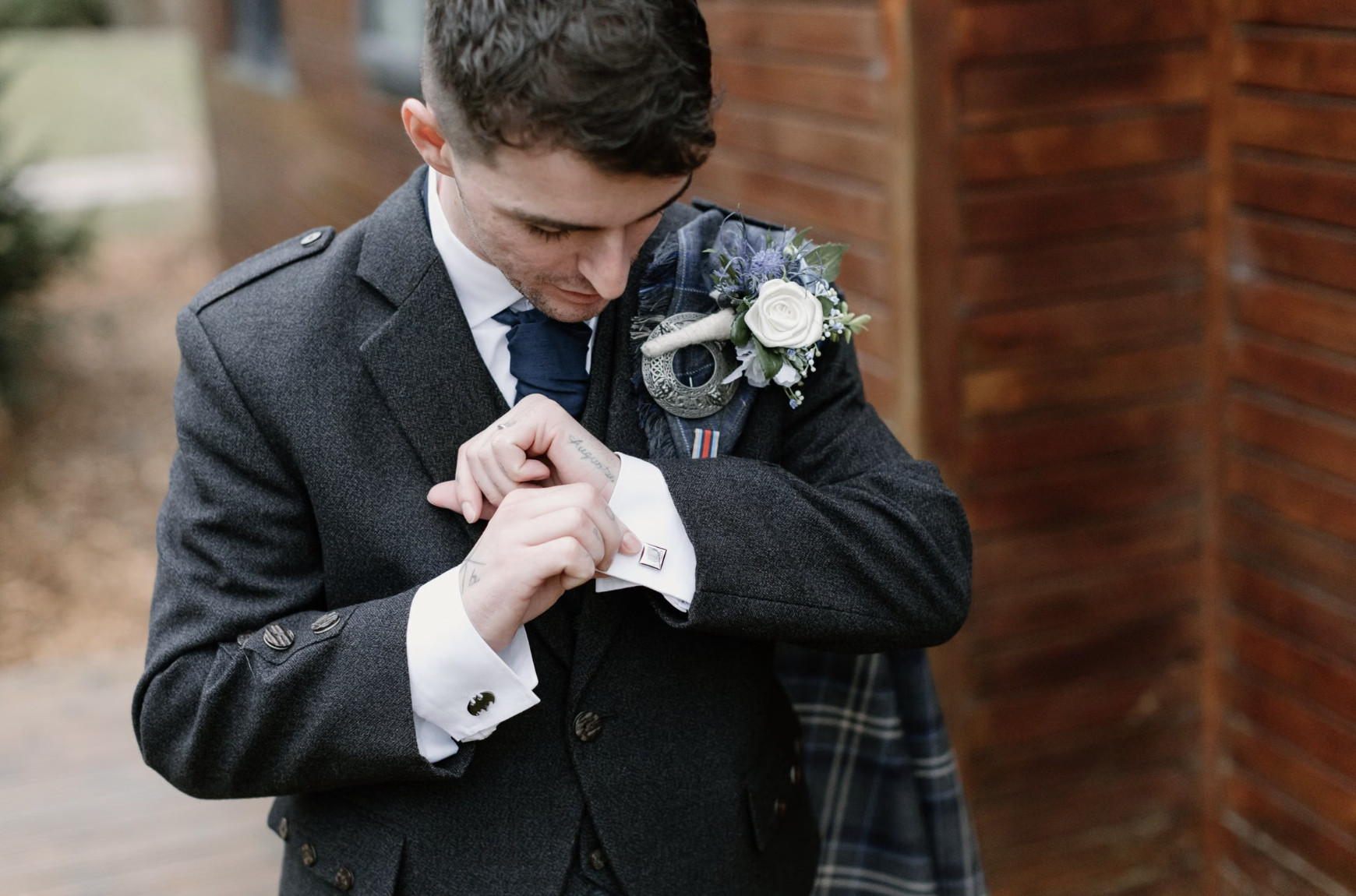
Most straightforward alterations cost around £25: shortening a trouser leg is roughly £10–£15, and taking in a sleeve is about £20.
Alex's top tip when buying off the shelf: make sure the suit fits your shoulders first. Taking in the waist is relatively cheap, but resetting the shoulders is one of the most expensive alterations a tailor can do.
Can suits bought overseas be altered by UK tailors?
Generally, yes, but with a caveat. Cheaper suits, wherever they're bought, tend to leave less seam allowance, meaning there's less margin for a tailor to work with. Buying slightly bigger gives more room to take a suit in, but there's rarely enough fabric to let one out. Alex says his team regularly alters suits brought in from abroad without major issues, provided the fabric allows for it.
Can hired suits be adjusted to fit?
To a degree. Most hire companies offer a shortening service, usually to the nearest quarter inch, but jackets themselves generally can't be altered, so it's essential to get the right jacket size (short, regular or long) from the outset. Some hire companies will also narrow the leg width, though this is less common.
How far in advance should a groom sort his outfit?
Alex recommends six to nine months. If you're having a suit made, the process alone typically takes around twelve weeks from start to finish, and the run-up to a wedding gets busy fast once you factor in how few free weekends actually remain.
What about last-minute weight changes?
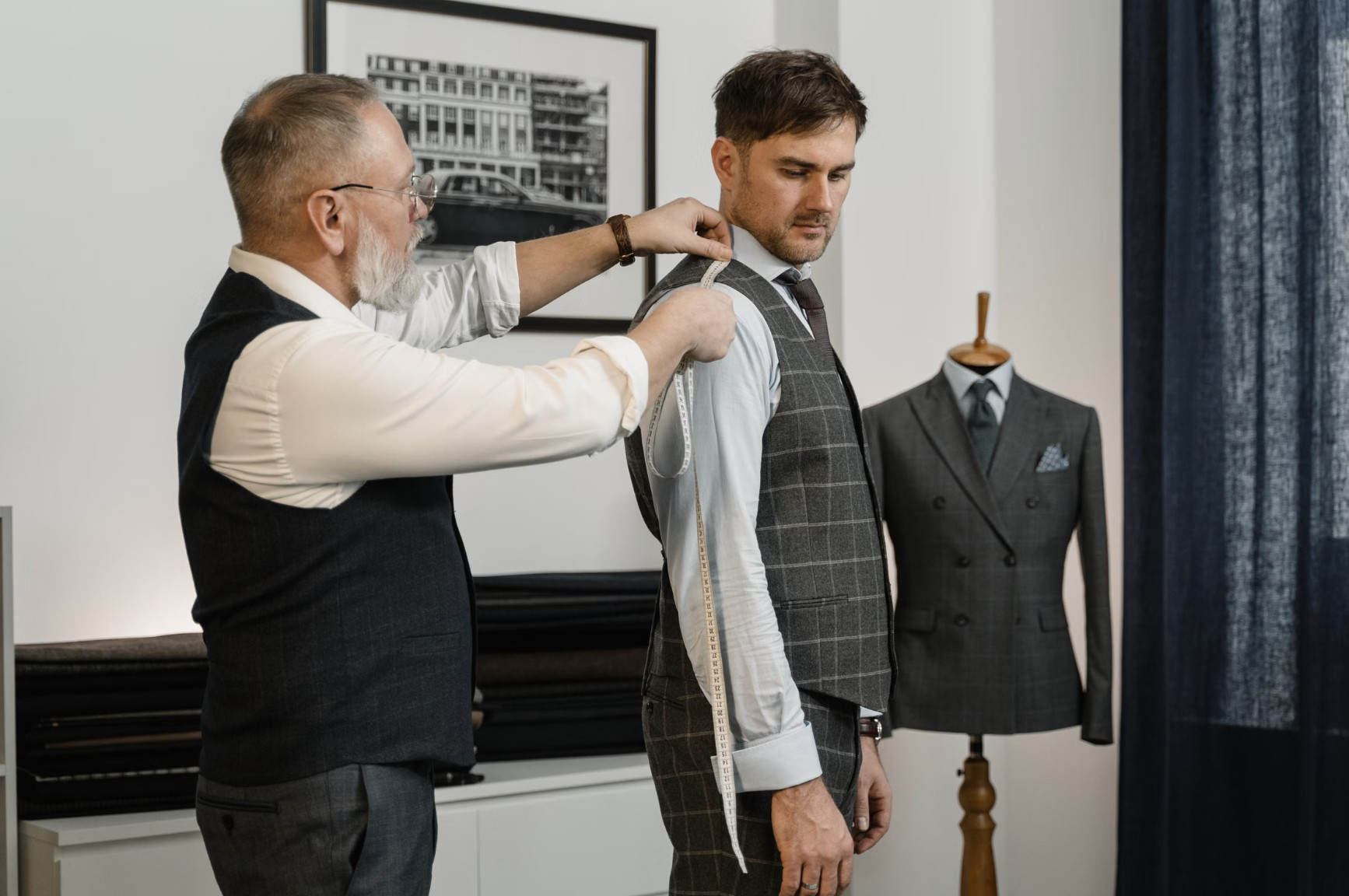
Just as with bridal wear, weight fluctuations are common in the lead-up to a wedding. That's why Alex doesn't finalise measurements at the initial appointment. Instead, he recommends booking a fitting two to four weeks before the big day, so any final adjustments can be made close to the wedding itself.
When should groomsmen be sorted?
Groomsmen don't need to be seen as early as the couple. Alex typically holds the initial consultation with just the couple, or the couple with parents or best man, and doesn't need to see the wider group until twelve to sixteen weeks before the wedding. A final "collection fitting" then takes place one to two weeks before, when everyone tries on their actual hired or bought suits.
His advice: never use a company that hands out suits the day before the wedding.
Should the best man's outfit differ from the other groomsmen?
This comes down to personal preference. Alex personally wouldn't differentiate the best man, though he notes it's sometimes nice for the father of the bride to stand out slightly. There's no hard rule here; it varies from couple to couple.
What should page boys wear, and at what age is a full suit appropriate?
For younger page boys, Alex favours chinos and braces, or smart trousers and braces, rather than a full suit, up to around age ten or eleven. Past that, a well-fitted suit (or a waistcoat and trousers for a slightly dressier option) tends to work better.
His general guide is that from around twelve to thirteen years old, boys can usually fit into smaller adult suits comfortably.
For keeping younger page boys looking tidy throughout the day, Alex recommends a waistcoat to keep shirts tucked in, and braces to keep trousers in place, both far more forgiving than a jacket on a fidgety child.
How do you dress a group with different shapes, sizes and budgets?
The key is choosing a specialist menswear shop used to fitting a wide range of body types. Most lounge suits can be adapted to suit most people with the right tailoring input.
Alex's practical suggestion for large, varied groups: skip hire in favour of buying suits in the £200–£300 range and having them altered. It's a small additional cost that makes a big difference to how well the whole party fits on the day.
Does the hire-versus-buy calculation change for groomsmen?
Very few people want to spend £1,000–£2,000 per groomsman, so Alex's advice is to look at good-quality wool-blend suits around the £250 mark. Buying rather than hiring gives the added benefit of alterations, meaning a much better overall fit across a group with different builds.
Are overseas suit purchases a false economy?
Often, yes. Alex is upfront about the maths:
"You can buy good suits in the UK for two, three hundred pounds. You can't have a suit made for that price. My biggest worry would be fabric. The average guy needs around four and a half metres of fabric, priced at fifty to a hundred and fifty pounds a metre, in his suit. So you can see very quickly, if you're having a suit made internationally for two, three, four hundred pounds, it just doesn't add up. You're going to be losing something somewhere, and normally that's fabric quality."
A suit made overseas in 24 hours might sound appealing, but it's almost always the fabric that suffers.
When is it appropriate to wear a hat at a wedding?
Far less often than it used to be. Traditionally, top hats were worn with morning suits, in the style still seen at Royal Ascot, but Alex says very few grooms request hats now unless it's specifically a morning suit wedding. His advice for guests: if in doubt about wearing a top hat, check with the groom first, so you don't accidentally outdress the wedding party.
How can accessories like ties and pocket squares pull a look together?
This is where a wedding's colour scheme really comes into play. Once you know your colours, whether from the flowers or the bridesmaids' dresses, working them into the tie is an easy way to tie the whole look together.
Liberty print ties are a popular choice here, since a mix of shades within the pattern means you don't need to match a bridesmaid's dress exactly. Alex also suggests thinking carefully about buttonholes and pocket squares together: a bold buttonhole can be overwhelmed by a busy pocket square placed right next to it, so it's worth discussing the full accessory combination with your tailor.
Are pocket watches still popular?
The trend appears to be fading. Pocket watches rose alongside the popularity of vintage-inspired tweed suits, but Alex senses that particular look, greens, sages and olive suits are the direction things are heading instead.
Is there a right time for the groom to take his tie off?
The groom effectively sets the tone for everyone else. As a general rule, once he removes his jacket or tie, it signals that other guests can do the same.
Alex suggests removing the jacket for the wedding breakfast (then putting it back on), with the first dance a natural point to take it off for good. Photographs are the main consideration: it's worth keeping the full look together until the formal photos are done.
And what about wedding shoes?
Traditionally it was black shoes, full stop. That's changed significantly, according to Alex.
"I thought you might ask me about shoes, so I've got some beside me actually. We've seen a big movement in shoes. Traditionally it was all about black shoes, and times have massively changed now."
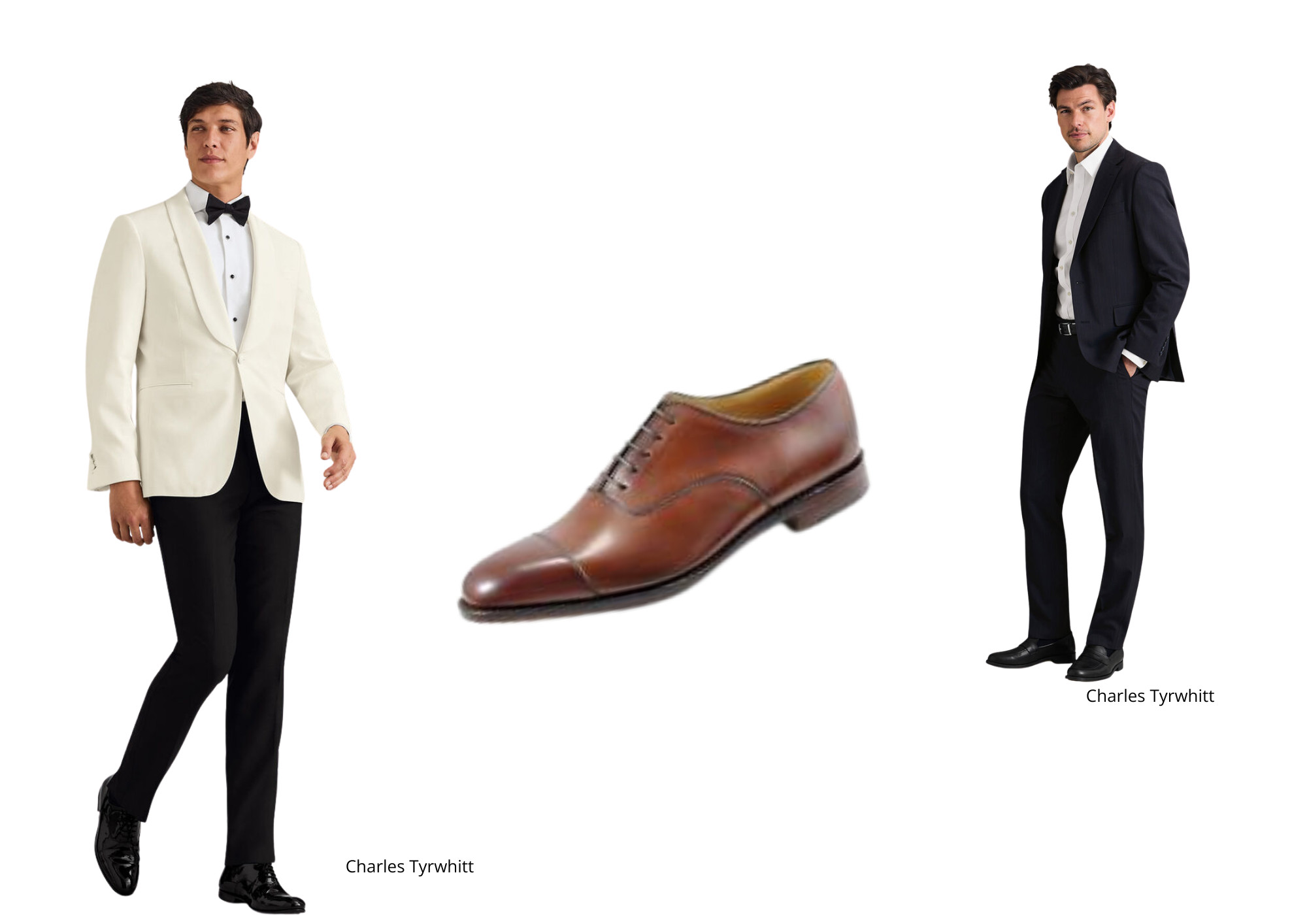
For a morning suit, a plain black Oxford shoe (not patent, not brogue detailing) is the traditional and correct choice.
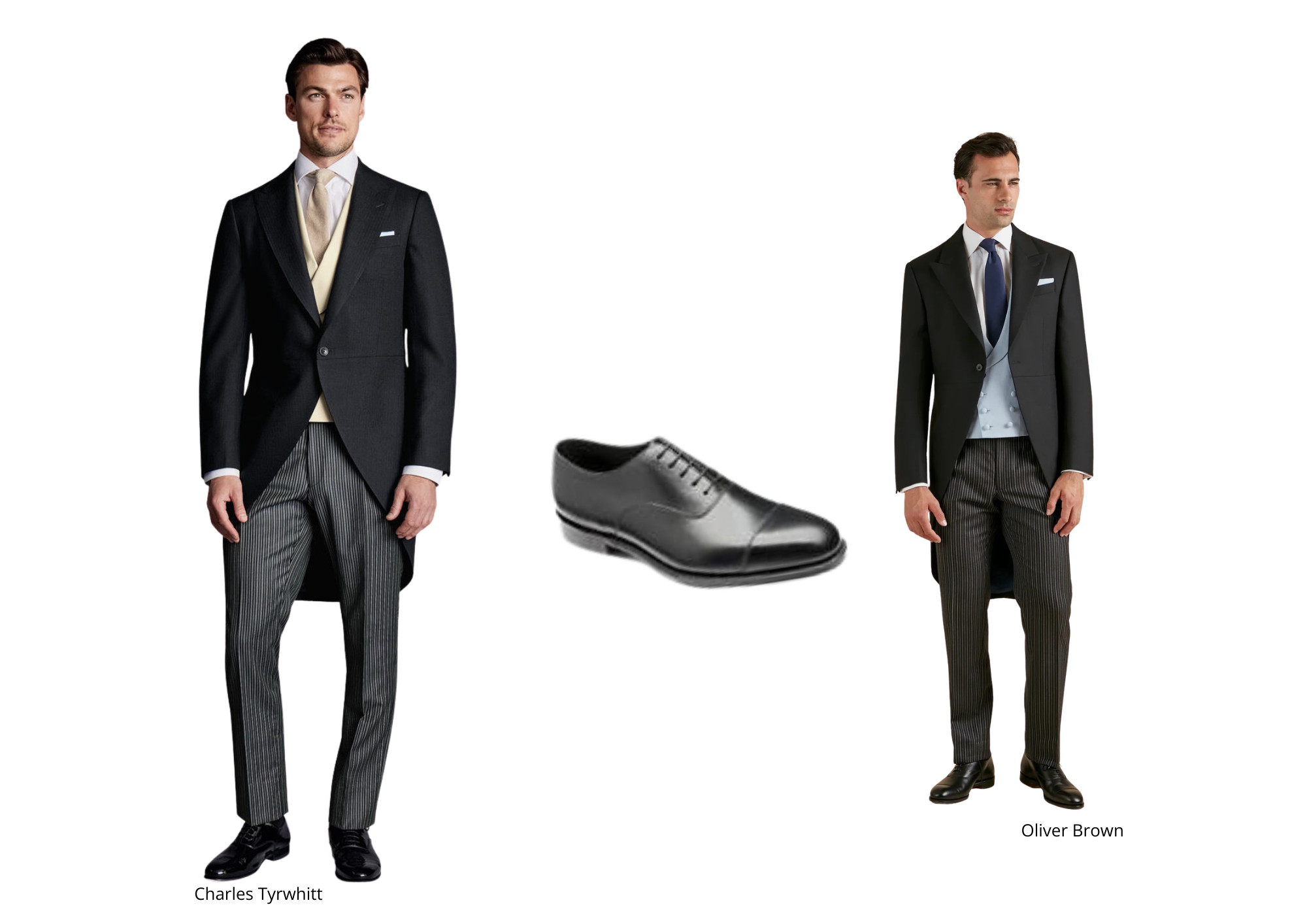
For a dinner suit, a patent leather shoe is the classic option, shiny black, and specifically for black tie.
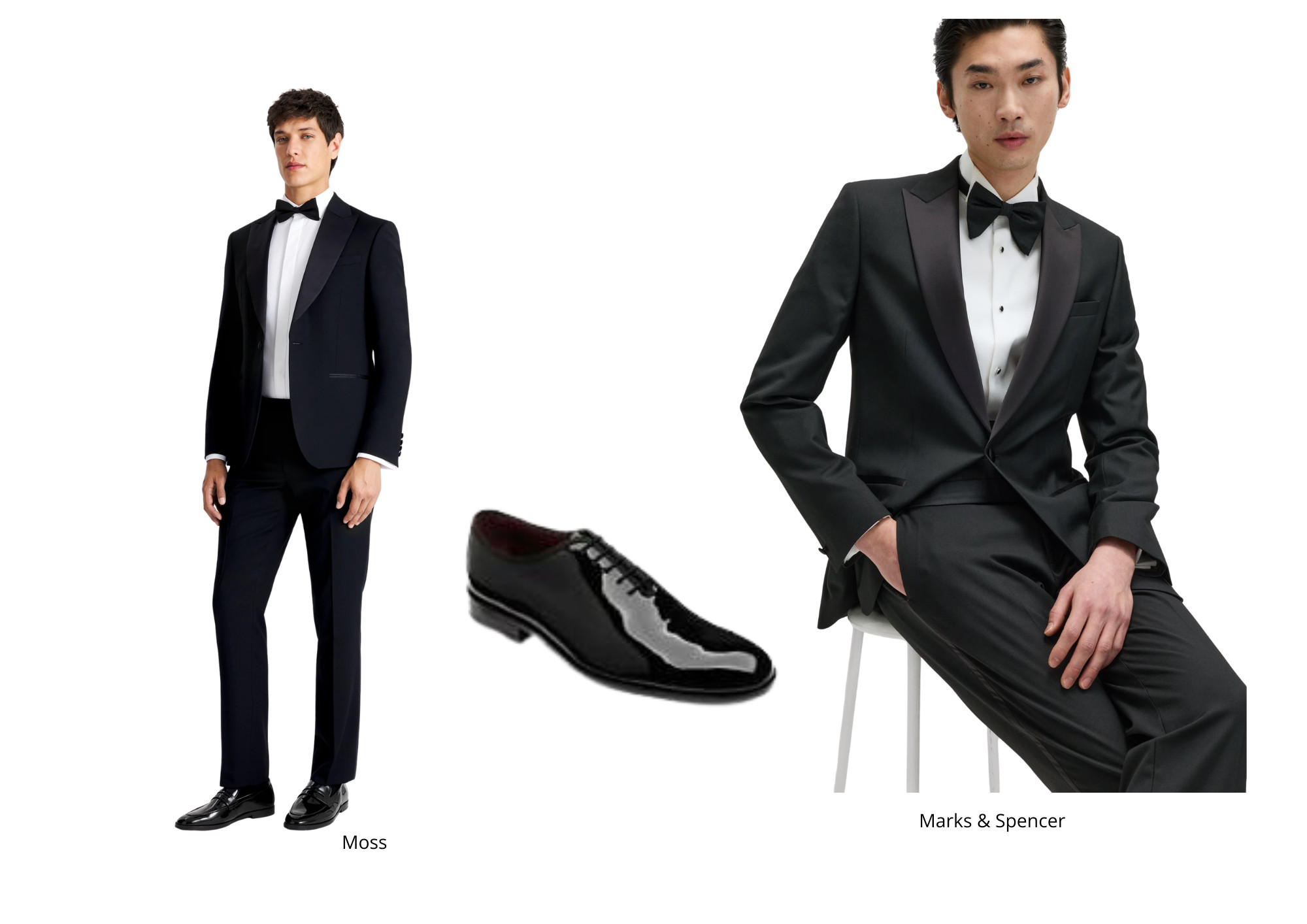
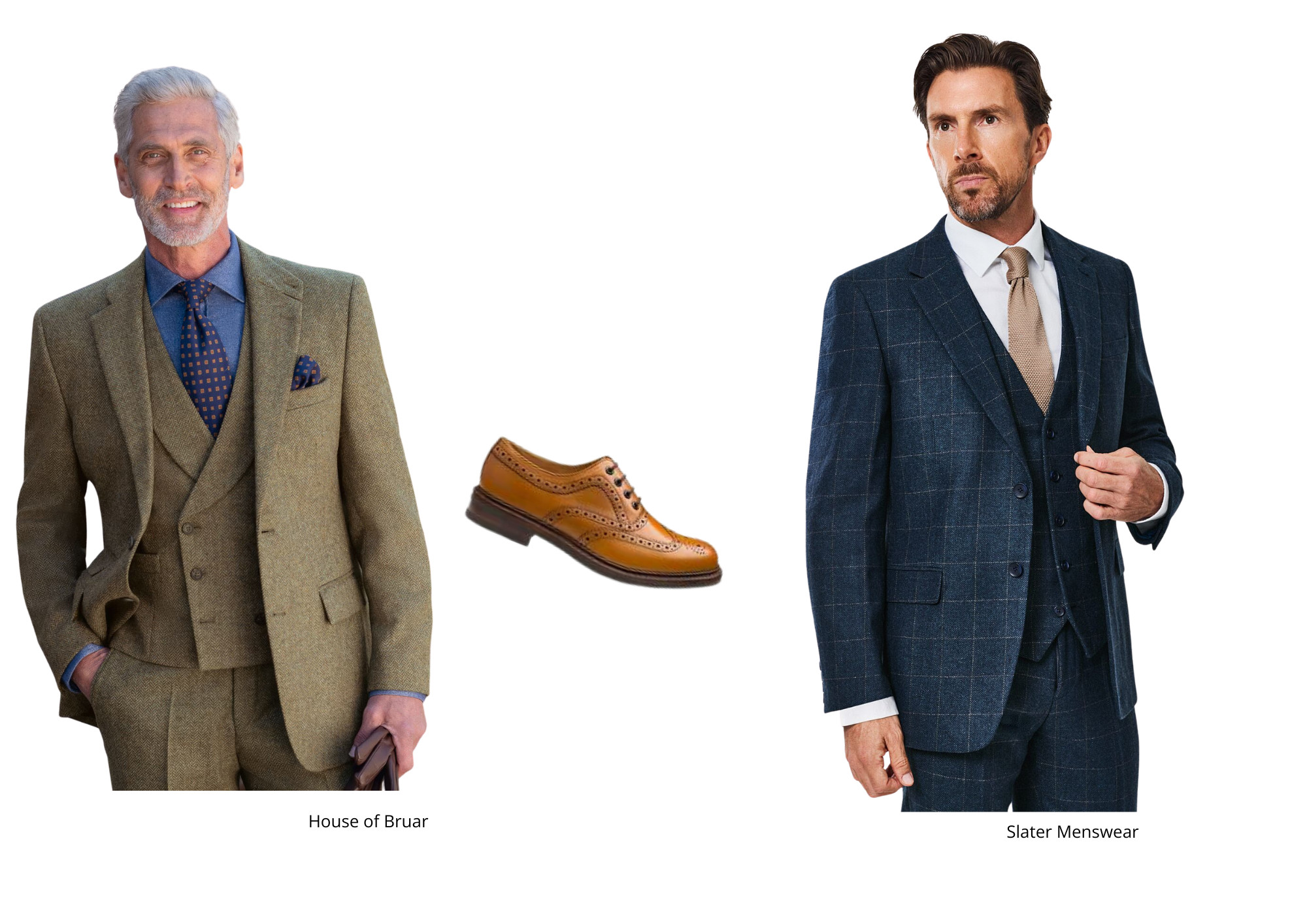
For every other suit, the move is firmly towards mahogany, a mid-to-dark brown rather than a light tan, in either an Oxford or brogue style. Alex estimates around 95% of his grooms are now choosing brown shoes, even with blue suits.
What's the biggest mistake couples make when telling guests what to wear?
Vagueness. Alex regularly sees guests arrive unsure of exactly what's expected because the invitation wasn't specific enough, particularly with open-ended phrases like "dress to impress" or even "smart casual," both of which are easily misread.
What's the clearest way to communicate a dress code to guests?
Put it plainly on the invitation.
"I would put it on the invite. If you wanted a black tie wedding, I would just put it clearly on there and say we would like all male guests wearing black tie. I just think there's no room for debate there, and it clears it up really, really well."
Whether it's working out your budget first, knowing your fabric weights, or simply being specific on the invitations, a little planning goes a long way towards making sure every man in the wedding party, from the groom down to the smallest page boy, looks and feels the part.
About the Expert: Alex Edwards
Alex Edwards is the founder of The Cotswold Tailor, where he has run a menswear store for almost fifteen years, working across bespoke tailoring, made to measure, wedding hire and ready to wear. He and his team see hundreds of grooms every year.
FAQs: A Grooms Guide on Wedding Suits