

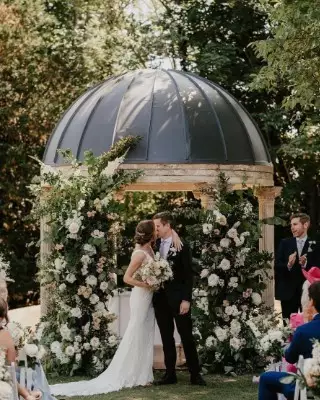
When someone you love is missing from your wedding day, finding the right way to remember them can be difficult. You may want them to feel part of the celebration, without their absence becoming the focus of the day.
You can honour a loved one at your wedding with a personal tribute such as an empty chair, memory table, photograph, favourite flower, song, reading or subtle detail incorporated into your outfit or bouquet. The right choice is one that feels personal to you and doesn't make the day more difficult.
I spoke to Jennifer Patrice, an independent wedding celebrant who conducts ceremonies around the world, about how couples can honour loved ones who have passed away. Drawing on her experience of helping couples navigate loss around their wedding day, Jennifer shares some of the personal and touching tributes she has seen during real ceremonies.
Should You Go Ahead With Your Wedding After a Bereavement?
If someone close to you dies shortly before your wedding, deciding whether the wedding should go ahead can feel incredibly difficult. Jennifer has supported couples through this situation and says there isn't one answer that will suit everybody.
"It's always a conversation with the couple and their nearest family members. If they decide that they want to go ahead with it, then that's absolutely what I will do and give them the service that really honours that family member."
Talk honestly with your partner and, if it feels helpful, those closest to you. You might decide to continue exactly as planned, make some changes to the day or find a particular way to acknowledge the person you've lost.
Whatever you decide, it needs to feel right for the two of you.
How Can You Honour Someone During Your Wedding Ceremony?
Your ceremony is one of the most natural places to acknowledge someone who would have been an important part of your wedding. Jennifer gives her couples several options depending on their beliefs, personalities and how visible they want the tribute to be.
"I offer them either a prayer if they are religious. If they are not then I always say that they can honour them either by lighting a candle or by having a memory table or they can have an empty chair with a rose or the person's favourite flower on that chair."
Some couples also place a photograph on the chair or somewhere within the ceremony space.
There is no need to choose a particular type of memorial simply because you have seen it at another wedding. Think about the person you are remembering and what would feel meaningful to you.
Watch: How to Honour Loved Ones at Your Wedding
In our Ask the Expert video, Jennifer shares more advice on choosing a wedding tribute, handling family opinions and working with your celebrant and other suppliers to make sure your plans are handled sensitively.
How can you acknowledge missing loved ones, without it becoming overwhelming?
If you would like to acknowledge someone but don't want a tribute to become too overwhelming, Jennifer recommends doing it near the beginning. This can also work well if you are remembering several people.
"What I do is at the top of the ceremony, I say a small sentence that has been agreed with the couple and I mention the names of the people."
Once your loved ones have been acknowledged, the ceremony can naturally move on to celebrating your marriage. As Jennifer explains, doing this early means that "before the overwhelm of the day, you've mentioned them and commemorated their memory."
I don't want to highlight missing guests in the ceremony or speeches, are there more personal ways to include them in the day?
You don't have to announce your tribute to everyone in the room. If you think hearing someone's name or seeing a prominent memorial during the ceremony could feel overwhelming, keeping something personal close to you can be just as meaningful.
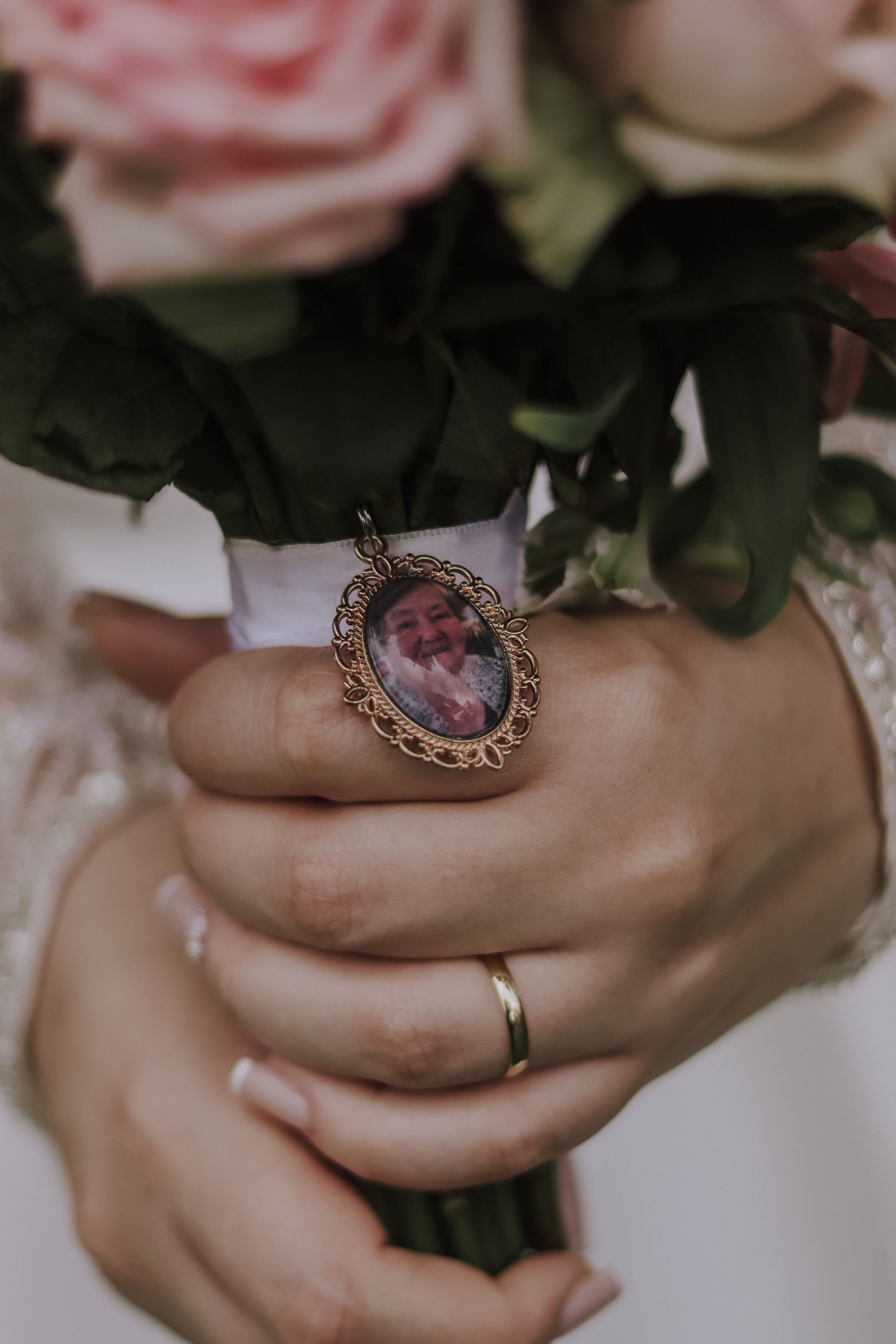
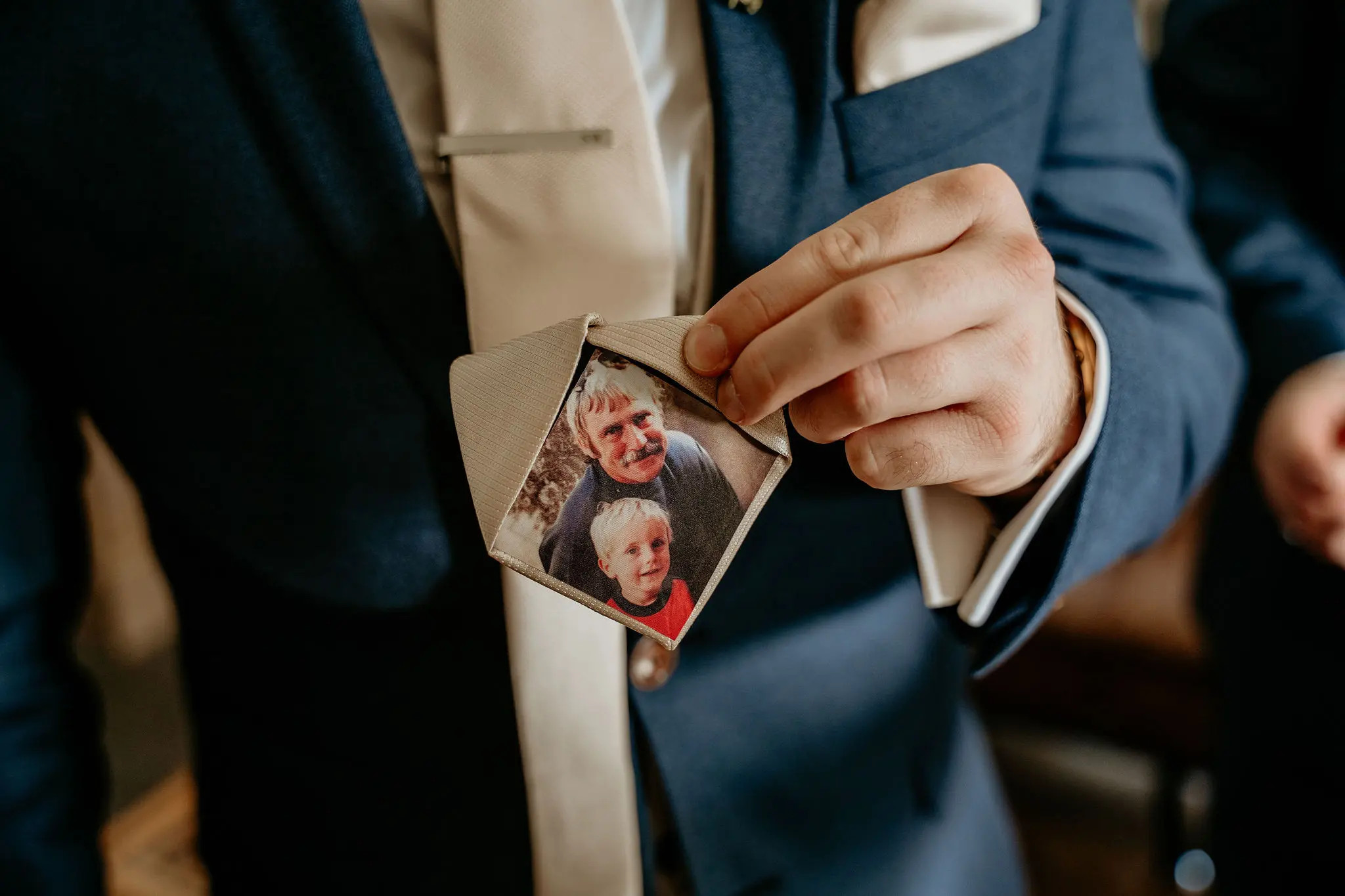
One of Jennifer's suggestions is a small cameo photograph.
"A cameo photo that will hang from the bride's bouquet or a cameo photo that will hang from a groom's watch... is a very, very lovely thing to do."
A small photograph attached to a bouquet or personal accessory allows you to keep the person close to you throughout the day without creating a formal moment of remembrance.
Is it appropriate to include others in remembering family members who are no longer with us?
Some of the most meaningful wedding tributes aren't immediately obvious to everyone else.
Jennifer remembers one bride whose father had died around two months before her wedding. He had a favourite shirt brand, so the couple found a way to incorporate that into the day.
"He had a particular favourite maker of shirts. And so all of the groomsmen wore a shirt from that particular brand and I also went out and bought a shirt and wore the shirt as well."
When the bride arrived, those closest to her were wearing something connected to her dad. It's a lovely example of starting with the person rather than searching for a generic wedding memorial idea.
Think about the things you associate with your loved one. It could be:
- their favourite flower
- a colour they always loved or wore
- a favourite song
- an item of clothing or accessory
- a favourite food or dessert
- a photograph
- a family tradition
- something connected to their personality or interests
It doesn't necessarily matter whether every guest understands the significance. Sometimes the most personal tributes are the ones only a handful of people recognise.
Can you honour a deceased friend at your wedding, or should it just be family members?
Wedding tributes don't have to be reserved for parents, grandparents or other family members. You can remember anyone who played an important part in your life.
Jennifer has also helped couples find ways to remember close friends. For one wedding, a bride wanted to acknowledge her late best friend. Rather than creating a formal memorial, she chose something very simple.
"Her best friend's colour is red and so what she is doing is having a ribbon tied around the base of her bouquet in red."
Those close to the bride know what the ribbon represents, but it doesn't turn the bouquet into an obvious memorial. It's a small detail with a very personal meaning.
Should you leave an empty chair as a reminder of the person you would have liked to share your day with?
An empty chair is one of the most recognisable ways to remember someone at a wedding. It can be incredibly meaningful, but it isn't right for every couple.
Jennifer encourages couples to think about how seeing that chair will make them feel, both during the ceremony and afterwards.
"If you know that a chair, an empty seat, is going to make you feel sad... remember when they get the photos they will always see that photo with the empty chair."
If seeing the chair would bring you comfort, it may be exactly the tribute you want. You could add a photograph, a rose or the person's favourite flower to the seat.
If you think the empty space will make their absence harder, there are plenty of other ways to include them.
As Jennifer says:
"Don't go in a direction where it's going to make you feel sad on your day."
How can you honour more than one loved one during your wedding?
If there are several people you would like to remember, you don't necessarily need a separate tribute for each person.
Your celebrant could acknowledge them together near the beginning of the ceremony, mentioning their names in a short sentence agreed with you beforehand.
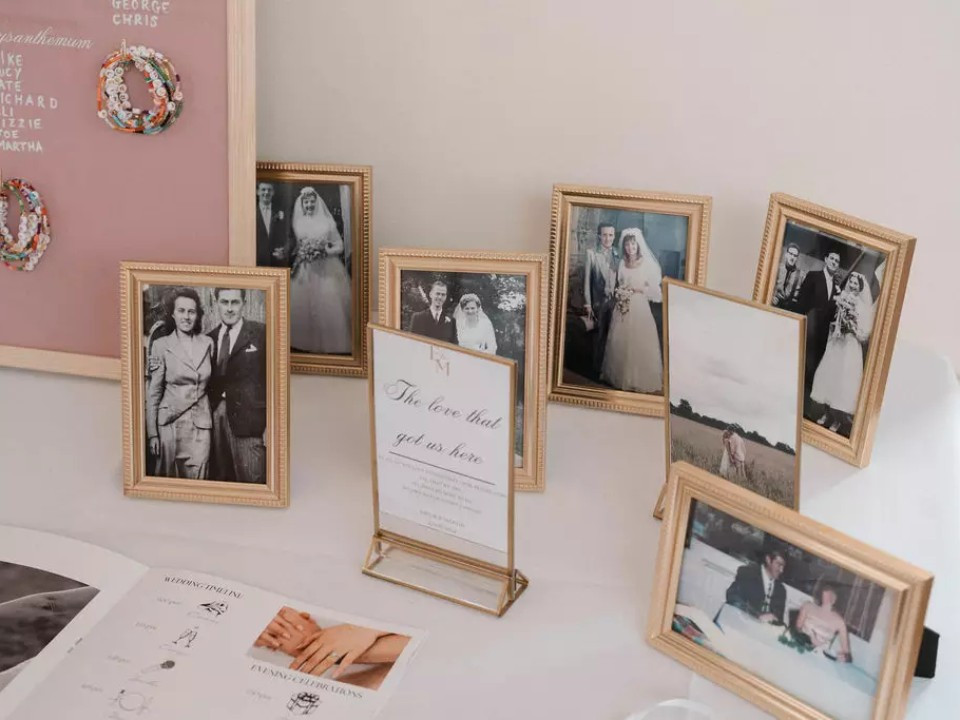
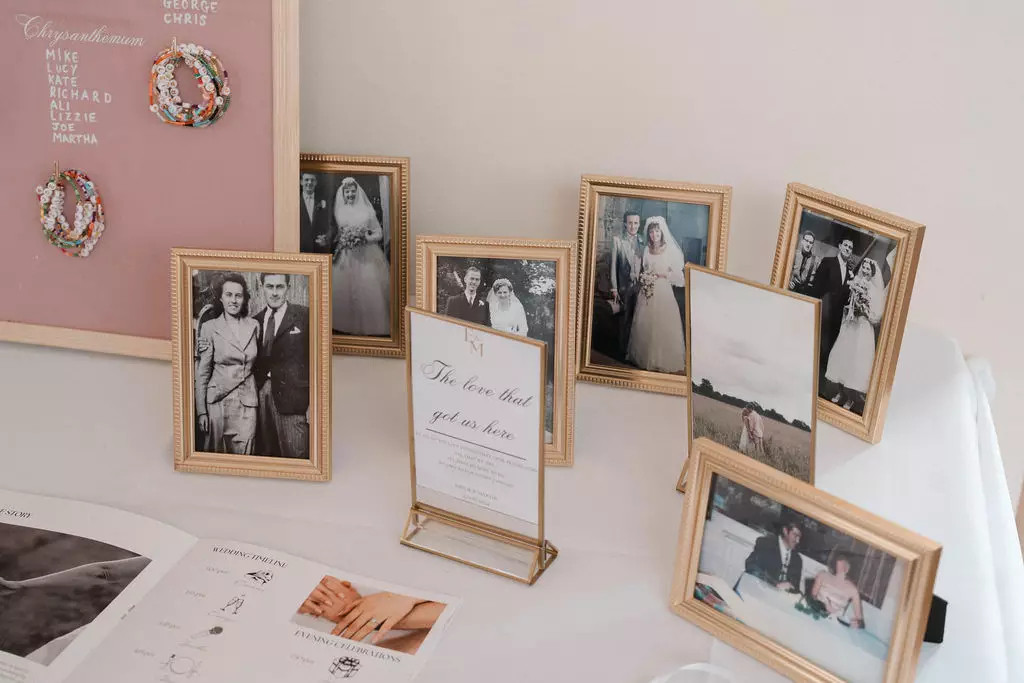
A memory table or photo wall is another option. Jennifer has seen couples create displays filled with photographs of loved ones, giving guests somewhere to remember them in their own time.
You could include photographs, flowers or small personal items connected to the people you are remembering. This can work particularly well if you want to acknowledge several family members or friends in one place, rather than creating several separate memorial moments during the wedding.
Is it appropriate to speak about loved ones that have passed away, during your wedding speeches?
Your tribute doesn't have to happen during the ceremony. Jennifer also sees couples mentioning loved ones during wedding speeches and talking about how much they would have enjoyed being part of the day.
You could share a favourite memory, mention something about the wedding they would have particularly loved or simply raise a glass to them.
It doesn't have to become a lengthy speech. Sometimes a few words are enough.
Can we use a reading or poem to express feelings we would find hard to share?
Finding your own words can be difficult, particularly when the person you're remembering was very close to you.
A carefully chosen poem or reading can help express something that you might struggle to say yourself.
Jennifer remembers working with a groom who was an only child and whose mother had passed away. She found a poem written from the perspective of a mother who would have loved to be at her son's wedding.
"The poem spoke as though she was speaking to him and the poem was read by her sister."
His mother's sister then read the poem during the ceremony.
This is an area where your celebrant can be particularly helpful. They may be able to research readings and poems that suit your relationship with the person you're remembering rather than choosing something simply because it is commonly used at weddings.
As Jennifer explains, celebrants can "research and find the exact thing that is needed for that couple in that ceremony."
Are there more subtle ways to include a tribute?
There are also plenty of opportunities to remember someone outside the ceremony.
Their favourite song could be played during the wedding. You might serve a dessert they loved or incorporate their favourite flower or another familiar detail into the celebration.
Jennifer has worked with other wedding suppliers to help couples do exactly this.
These details don't always need to be explained to your guests. It can simply be something that you and the people closest to you recognise.
Should we tell any of our suppliers that we are including a tribute to missing loved ones?
Once you've decided how you're going to remember someone, make sure the wedding suppliers who need to know are aware of your plans.
Jennifer speaks to wedding photographers beforehand if there's an empty seat or a particular commemorative moment planned during the ceremony.
"If there's an empty seat, I let them know why. If there's a commemoration to a missing family member, I let them know that that will be coming up."
This means the photographer understands the significance of what they are seeing and can work around it appropriately.
The same applies to other suppliers. If a musician is going to play someone's favourite song, make sure they understand the plan. If you're incorporating a favourite dessert, your caterer will need to know.
You don't need to explain every personal detail to every supplier. Just make sure the people directly involved know what is happening.
What if your family don't agree with you including a tribute, or feel you should include a tribute you are uncomfortable with?
Grief is personal, so members of the same family may have very different feelings about how someone should be remembered. Jennifer's starting point is clear:
"At the end of the day it is the couple's day and they should do what they feel most comfortable with."
That doesn't mean other people's concerns have to be ignored.
Jennifer sometimes speaks directly with relatives when there is disagreement about a tribute. She finds that family members can be concerned about whether the person will be remembered in a dignified way.
Having your celebrant involved in these conversations can be helpful. They can explain what is planned and how the tribute will fit into the ceremony, which can take some of the pressure off the couple.
Will actively remembering someone on our wedding day make everyone feel sad?
Honouring someone who has passed away doesn't have to mean creating a sombre moment in your wedding.
It could be a photograph attached to your bouquet, a ribbon in their favourite colour, their favourite song later in the evening or a few words at the beginning of the ceremony.
There isn't a right amount of remembrance. Think about the person you are remembering, what would feel like them and, importantly, how the tribute will make you feel on the wedding day and afterwards.
If you do want a formal acknowledgement, Jennifer's final piece of advice is to consider including it near the beginning of the ceremony.
"You've mentioned it at the top of the ceremony and then you can settle in to the rest of the day."
Once they have been acknowledged, you can move into the rest of your wedding knowing that they have been included in a way that feels right for you.
About the Expert: Jennifer Patrice
Jennifer Patrice is an independent wedding celebrant who conducts wedding ceremonies around the world. She works with couples to create personal ceremonies and has experience helping couples and their families find sensitive ways to acknowledge loved ones who have passed away.


In past 12 months
Jennifer Patrice Celebrant
London-based wedding celebrant crafting custom ceremonies including renewals, elopements and naming services.FAQs About Remembering Loved Ones at a Wedding